
At the Edge of the World: Our Patagonia Group Adventure
A field guide to trekking Torres del Paine in a small group, and living well while you do it
The road into Torres del Paine is best met at first light. You leave in the dark, coffee in hand, and for a while there is nothing but the low hum of the vehicle and the black shapes of the steppe. Then the sky begins to turn. It comes slowly at first, a bruise of violet along the ridgeline, and then all at once the sun breaks and the towers ignite, three granite spires catching fire from the top down while the valley below is still deep in shadow. Nobody speaks. Someone reaches for a camera and thinks better of it. This is the moment every traveller remembers, and it is only the beginning of the day.
If you are reading this, you are probably already dreaming about Patagonia and trying to work out what a trip here actually involves. This guide is meant to help. Below we walk through what the days look like on the trail, when to come, how fit you need to be, what is included, and where you rest your head at night, so that you can picture the trip clearly and decide whether our small group approach is right for you.
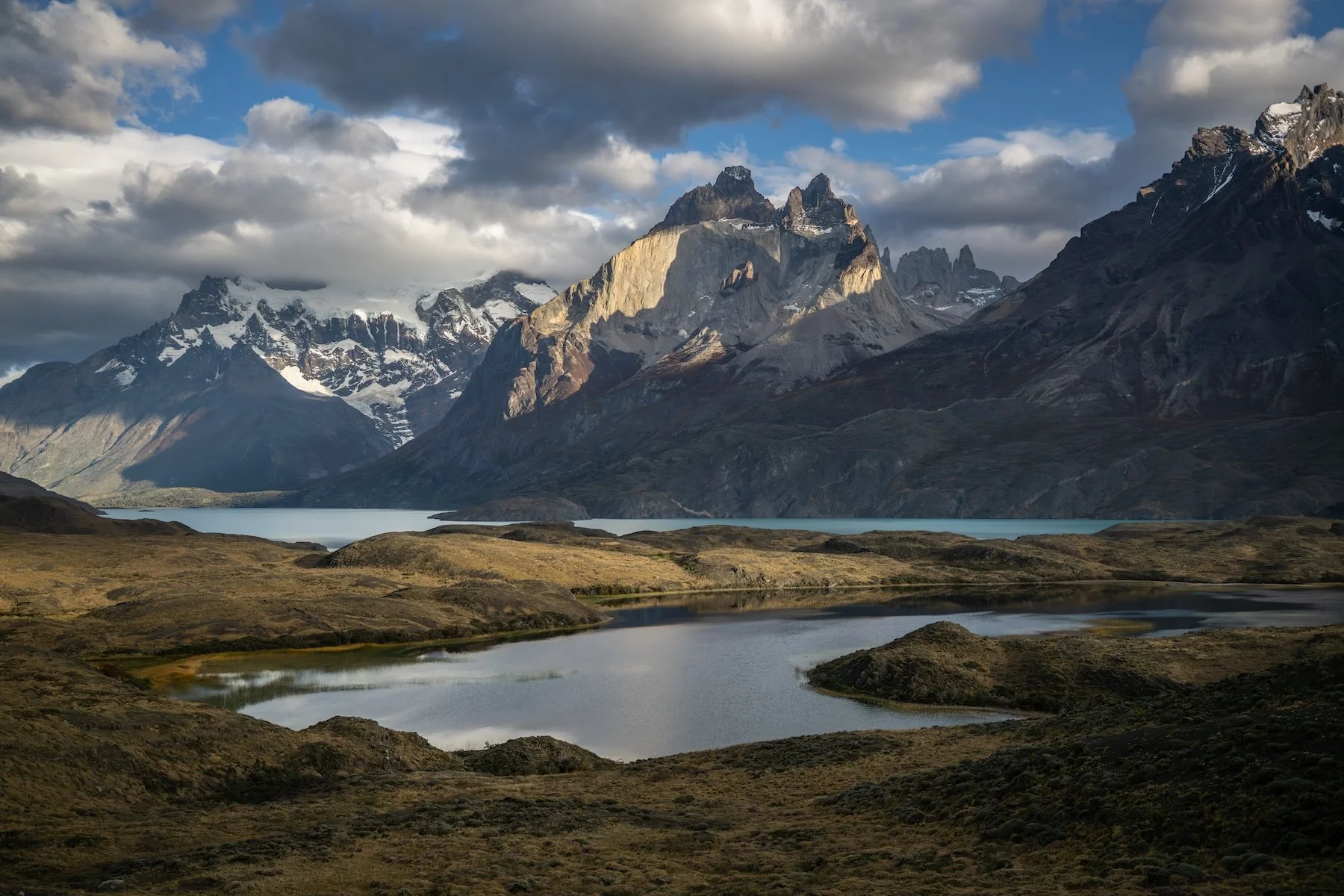
What the Days Look Like on the W Route
Most travellers come to Torres del Paine for the W, the classic route that traces three valleys into the heart of the massif and takes its name from the shape it draws across the map. Our group covers its highlights over several days, and you do not need to carry a heavy pack between mountain refuges to do it. We base ourselves in comfort and set out each morning on a series of day hikes, which means you walk with a light daypack and return each night to a warm bed, a hot shower, and a proper dinner.
The signature day is the climb to the base of the towers, a demanding walk of roughly nine hours that ends at a glacial lagoon directly beneath the three spires. Other days are gentler and no less beautiful. You might hike the French Valley between hanging glaciers, walk the shore of milky blue Lake Nordenskjold, or stand close enough to Grey Glacier to hear it crack and groan as it moves. Expect changeable weather that can deliver four seasons before lunch, and expect the wind, which locals talk about the way sailors talk about the sea. None of it is watched through a window. You feel it in your legs at the end of the day, and you carry it home.
When to Go
The Patagonian trekking season runs from roughly October to April, and each stretch of it has its own character. November and early December bring spring, long daylight, wildflowers, and thinner crowds, though the wind is at its most theatrical. December through February is high summer, with the warmest temperatures, the busiest trails, and the best chance of settled conditions. March and early April usher in autumn, when the beech forests turn crimson and gold, the wind eases, and the light grows soft and low. There is no single perfect window. If you want warmth and long days, come in summer. If you want colour and calm, come in autumn. We run our group departures across the season and are happy to talk through the trade offs for the dates you have in mind.
How Fit You Need to Be
You do not need to be an athlete, but you do need to arrive ready to walk. A typical day covers somewhere between twelve and twenty two kilometres over uneven ground, with rocky sections, exposed ridges, and real ascents and descents. The base of the towers day is the toughest, climbing around eight hundred metres to the lookout, and most people find the final scramble the hardest hour of the week. If you can comfortably hike for six to eight hours and you train beforehand with regular walks, stairs, and a few longer days on hilly terrain, you will be in good shape. We keep the pace civilised, build in rest, and where a given day feels like too much, there is always a gentler alternative. This is a trip you finish tired in the best way, not broken.
Where We Stay: Tierra Patagonia

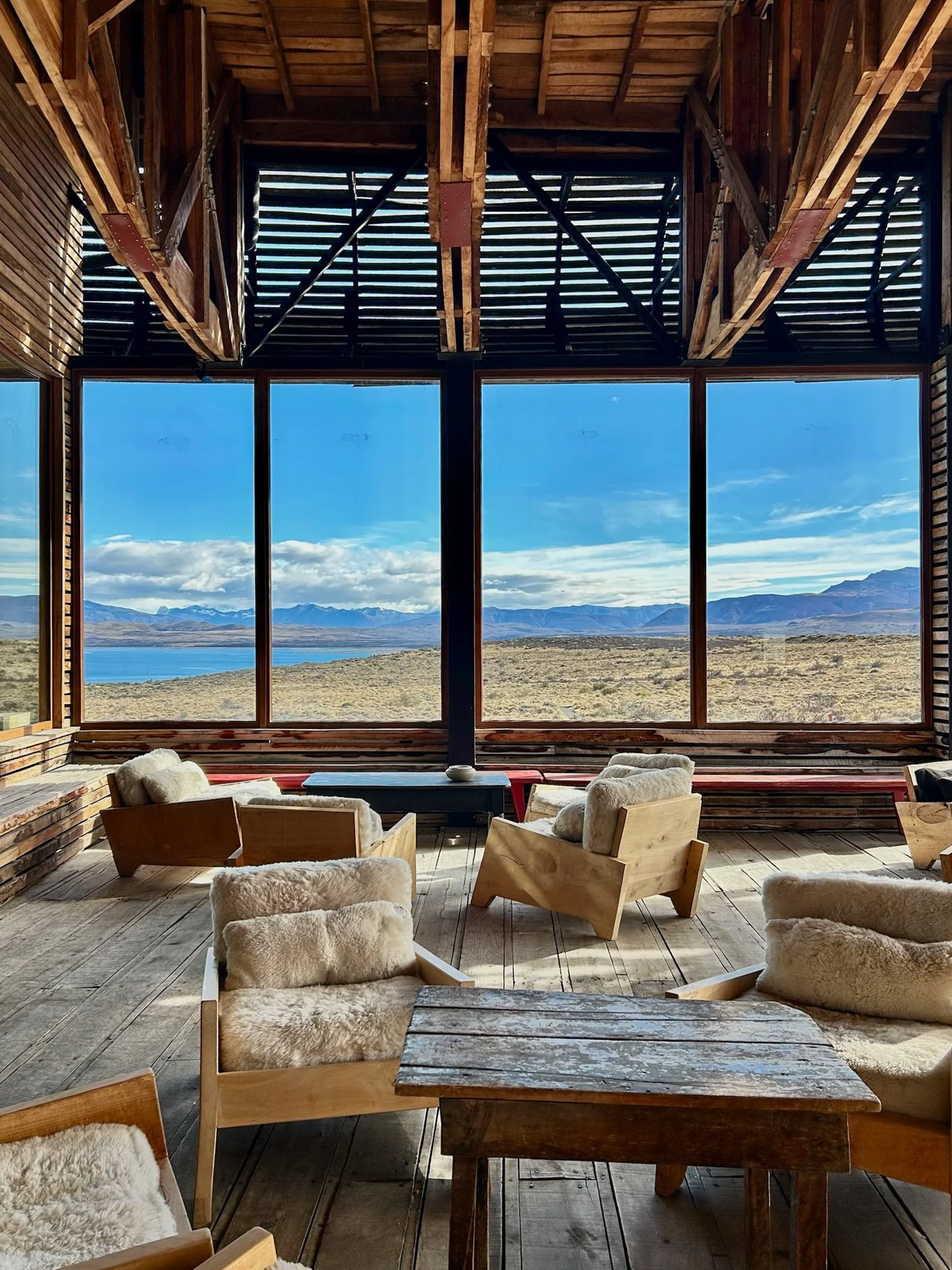
After a day on the trail, home is Tierra Patagonia, and it is one of the reasons our travellers talk about this trip for years afterward. The lodge sits on a low rise above Lake Sarmiento, just outside the national park, and its long low form seems to grow out of the land itself. Floor to ceiling windows frame the massif so completely that you can lie back on your bed and watch the light move across the towers as the afternoon turns to evening. Nature becomes the artwork on every wall.
What makes it special is how it holds you after a big day outdoors. There is a warm pool and a spa where tired muscles recover, a fire that gathers everyone together as the temperature drops, and a kitchen that leans into the flavours of the region, from Patagonian lamb cooked slowly over open flame to crisp wines from further north. The guides sit with you at dinner and trace tomorrow’s route on the map, and by the time you climb into bed the day feels complete. Comfort here is not about excess. It is about being cared for so thoroughly that you can give everything to the adventure and still feel restored by morning.
The People You Meet Along the Way
There is something about a shared trail that turns strangers into friends. We keep our groups deliberately small, usually a handful of curious travellers who arrive as individuals and leave as a tribe. You will find yourself trading stories at breakfast, encouraging each other up the final switchbacks to the base of the towers, and raising a glass together when you make it. Some people come solo, some as couples, and a few return year after year for a different corner of the world. A small group also means the trip flexes around you, with the freedom to slow down, linger at a viewpoint, or adjust the plan when the weather turns, in a way that a coach load of forty simply cannot.
What Is Included
Our Chilean Patagonia group adventure runs seven days and six nights and is priced from 6,995 US dollars per person. That covers your accommodation, including nights at Tierra Patagonia, all meals while you are with us, park entry, expert bilingual guides, and all in country transport from the moment you arrive. What it does not include is your international airfare into Chile, travel insurance, and the odd extra drink or spa treatment you decide to treat yourself to. If you would like the full day by day itinerary, or you want to build a private version of the trip around your own dates, we are only ever an email away.
Patagonia has a way of resetting something inside you. You return home a little quieter, a little braver, and already wondering where the next adventure might lead. If the towers are calling, we would love to help you answer. Reach out to start planning your Patagonia group adventure, and let us show you the edge of the world.