
Chilean or Argentine Patagonia: Which Side Should You Visit?
Torres del Paine or Fitz Roy? Granite towers or glaciers? A straight comparison of the two sides of Patagonia, and why the best answer is often both.
If you only have one week, choose Chilean Patagonia for Torres del Paine and the W Trek. If you want variety over a single iconic massif, choose Argentine Patagonia for Fitz Roy, Perito Moreno Glacier and the estancia country of the steppe. If you have two weeks, do both, because the border crossing between them is easier than most people expect.
That is the honest summary. Below is what actually separates the two sides, from someone who runs trips on both.
Chilean Patagonia: Torres del Paine
Chilean Patagonia concentrates. Almost everything travellers come for sits inside one national park, and that park is one of the great mountain landscapes on earth: three granite towers, the horned Cuernos, turquoise lakes, hanging glaciers and a wind that never quite stops.
The signature walk is the W Trek, roughly 49.7 miles or 80 kilometres across three days with about 8,956 feet of ascent, tracing a W through the massif. It takes in the climb to Mirador Base Las Torres, the French Valley, and the suspension bridges above Grey Glacier.
Chile also has the better wildlife story. Torres del Paine holds one of the highest densities of puma anywhere, and guanaco, condor and rhea are everyday sightings on the steppe around the park.
Choose Chile if: you want the most concentrated, dramatic trekking in Patagonia, you like the idea of one base and three big days, and you want a real chance of seeing a puma.
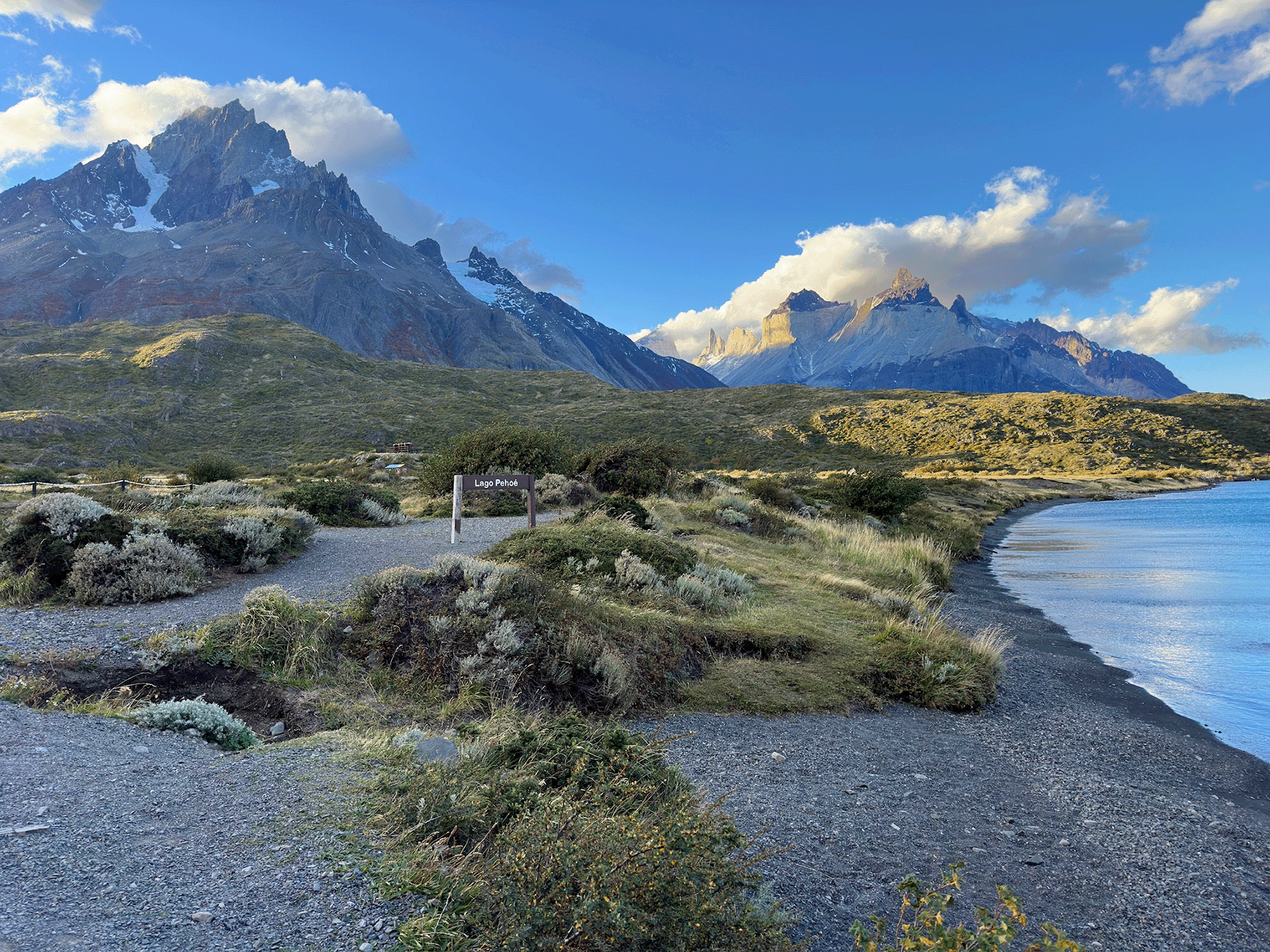
Torres del Paine National Park, Chile
Argentine Patagonia: El Chalten, El Calafate and the Steppe
Argentine Patagonia spreads out. It is bigger, more varied and more spread across distinct places rather than one park.
El Chalten is the trekking capital, a small mountain town built entirely for the outdoors and ringed by breweries and independent restaurants. The trails start at the edge of town, which is rare anywhere in the world. The signature walk is Laguna de los Tres beneath Mount Fitz Roy, around 15 miles return with 3,454 feet of ascent, and its quieter sibling is Laguna Torre, about 12 miles return, looking up at the needle of Cerro Torre.
South of there, El Calafate is the gateway to Perito Moreno Glacier, a wall of ice rising some 230 feet above Lago Argentino that you can hike across in crampons. Around it lies estancia country, where the sheep stations of the steppe have become some of the most characterful places to stay in South America.
Choose Argentina if: you want more variety, town-edge trailheads, ice trekking and horseback riding on the steppe, and the option to start or finish in Buenos Aires.

Perito Moreno Glacier, Argentina
Head to Head
Trekking
Chile wins on a single iconic multi-day route. Argentina wins on day hikes that begin at your door. Fitz Roy and the Base of the Towers are both full days with a serious climb; neither side is easier than the other.
Glaciers
Argentina, comfortably. Perito Moreno is accessible, enormous and one of very few glaciers in the world you can walk on with a guide. Chile counters with Grey Glacier, which is spectacular but experienced mostly from a distance or a boat.
Wildlife
Chile. Torres del Paine is the best place in Patagonia to look for puma, and guanaco are everywhere.
Where you sleep
Different, rather than better. Chile has a handful of exceptional design-led lodges positioned to look straight at the massif. Argentina has estancias, working sheep stations turned into places of quiet, remote comfort where meals and drinks are usually included.
Food and wine
Argentina, if you are counting Buenos Aires, Malbec and the parrilla. Chile answers with Carmenere, Pacific seafood and a lamb tradition of its own in the far south.
Getting around
Argentina involves more internal distance and usually a domestic flight or two. Chile is tighter, though the flight south from Santiago is around three hours before you even reach the park.
Crossing the Border and Doing Both
This is where most comparisons stop, and it is the most useful part. El Calafate and Torres del Paine are connected by an overland route of roughly five hours by road. On our private itineraries that leg is a private transfer with the paperwork handled for you, which turns two separate trips into one continuous journey.
Our 14-day Argentine and Chilean Patagonia itinerary does exactly that: Buenos Aires, then El Chalten for Fitz Roy and Laguna Torre, then an estancia lodge outside El Calafate with ice trekking on Perito Moreno, then across the border for three days of the W Trek from Torres del Paine, finishing at The Singular Patagonia near Puerto Natales.
How Many Days Each Side Needs
Chile only: around a week, which is enough for the three arms of the W plus travel days at either end.
Argentina only: eight to ten days for El Chalten, El Calafate and Perito Moreno, plus a night or two in Buenos Aires.
Both: fourteen days. Fewer than that and the border crossing eats too much of what you came for.
So Which Side Should You Choose?
First trip to Patagonia and short on time: Chile. Torres del Paine delivers the most in the fewest days, and it is the image most people have in their head when they say the word Patagonia.
Second trip, or travelling with people who do not all want to walk every day: Argentina. The variety is greater and the days flex more easily.
Two weeks and one shot at it: both. Crossing from the steppe into Chile partway through a trip is one of the great transitions in travel, and the two sides make more sense together than either does alone.
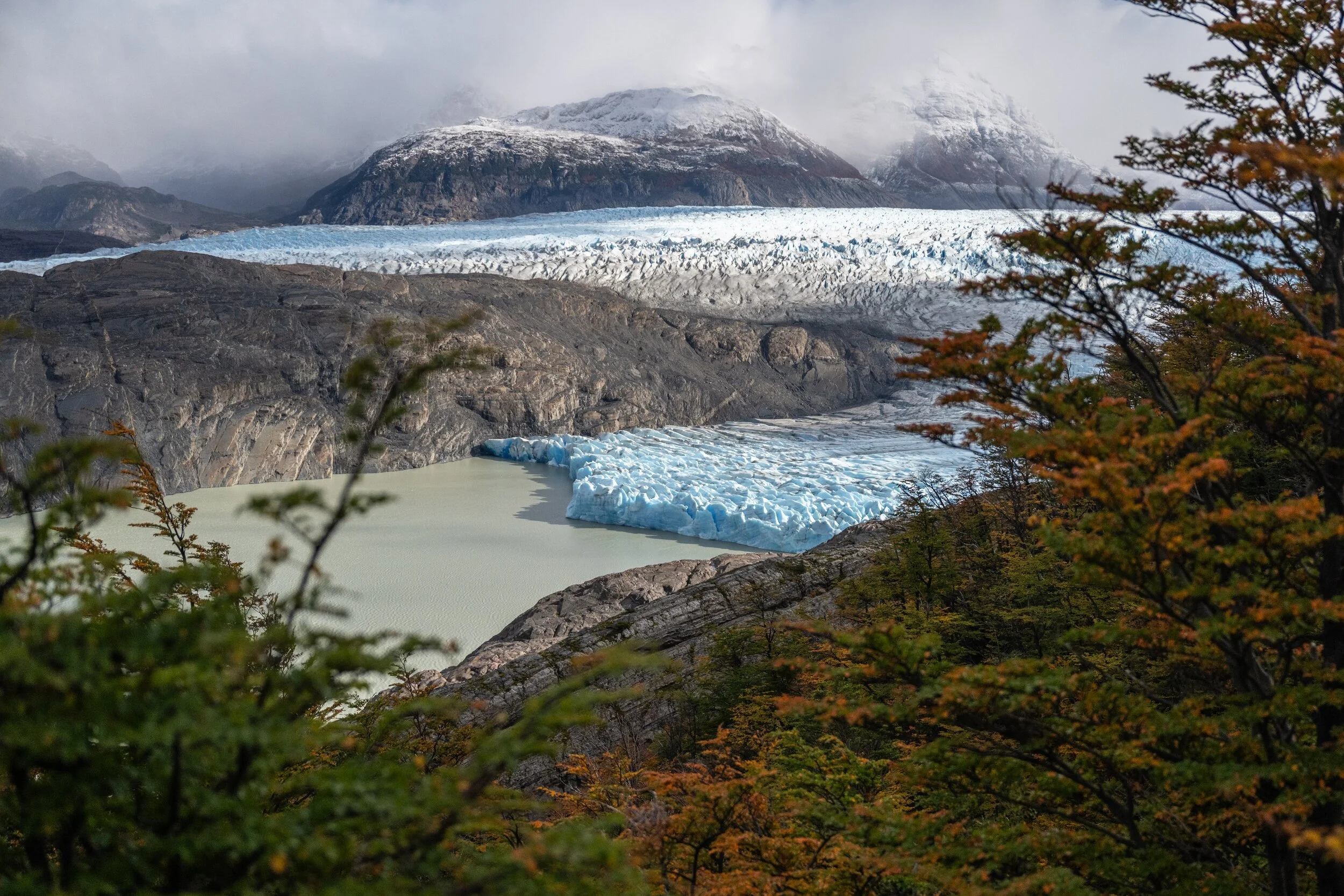
Torres del Paine National Park, Chile
Frequently Asked Questions
Is Chilean or Argentine Patagonia better?
Chilean Patagonia is better for concentrated trekking and wildlife in a single national park. Argentine Patagonia is better for glaciers, variety and access to Buenos Aires. Neither is universally better; it depends on how long you have and what you want from the days.
Can you visit both Chilean and Argentine Patagonia in one trip?
Yes. El Calafate in Argentina and Torres del Paine in Chile are around five hours apart overland, and the crossing is straightforward with transfers arranged. Two weeks is the comfortable minimum for both.
Torres del Paine or Fitz Roy?
Torres del Paine if you want a multi-day route through one spectacular park. Fitz Roy if you want big day hikes that start from a mountain town, with beer and dinner waiting at the end.
Which side of Patagonia is better for non-hikers?
Argentina, marginally. Perito Moreno Glacier, boat trips on Lago Argentino, horseback riding on the steppe and Buenos Aires give you a full trip without a single long climb. That said, Chile works too, with wildlife tracking, spa days and short walks from a lodge base.
When is the best time to visit either side?
October through April, with March to April and October to November our favourite windows on both sides of the border.
Plan Your Patagonia Trip
We plan Patagonia in both countries and nothing else matters to us more. Explore our private Patagonia journeys, look at the 14-day route across both sides, see our next small group departure in Torres del Paine, or tell us what you have in mind.