
Two Days in Stavanger: Old Town, Michelin Stars and the Road to Pulpit Rock
A walkable, well-fed city with a 604-metre cliff an hour away, and how to spend the two days most people give it.
Stavanger is a city of about 150,000 people that behaves like somewhere three times the size. Norway’s oldest cathedral sits at one end of the centre and one of Norway’s best-preserved wooden-house neighbourhoods at the other, and the money that came ashore with North Sea oil in the seventies is the reason a town this small has a three-star restaurant and a food street with dozens of places on it.
Most travellers get two days here, usually attached to Preikestolen or a Lysefjord cruise. Two days is enough, if you spend them properly. The short version: stay in the centre and walk everywhere, give the old town a slow morning, eat on Pedersgata at least once, book a floating sauna before you arrive, and protect one full day for the fjord. Stavanger is compact, relatively flat and much better at food than its size suggests, and it rewards wandering far more than it rewards ticking things off.
The Shape of the City
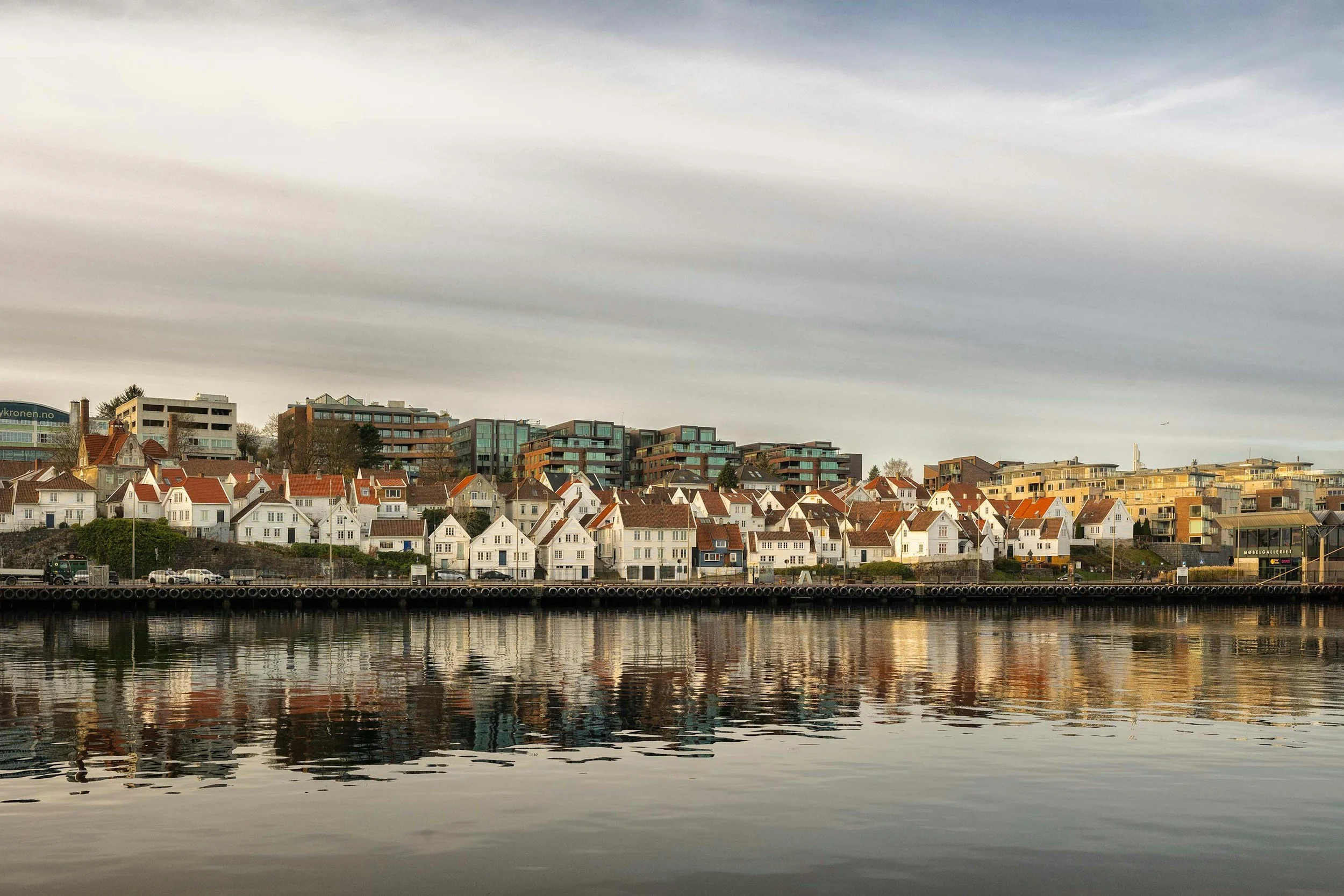
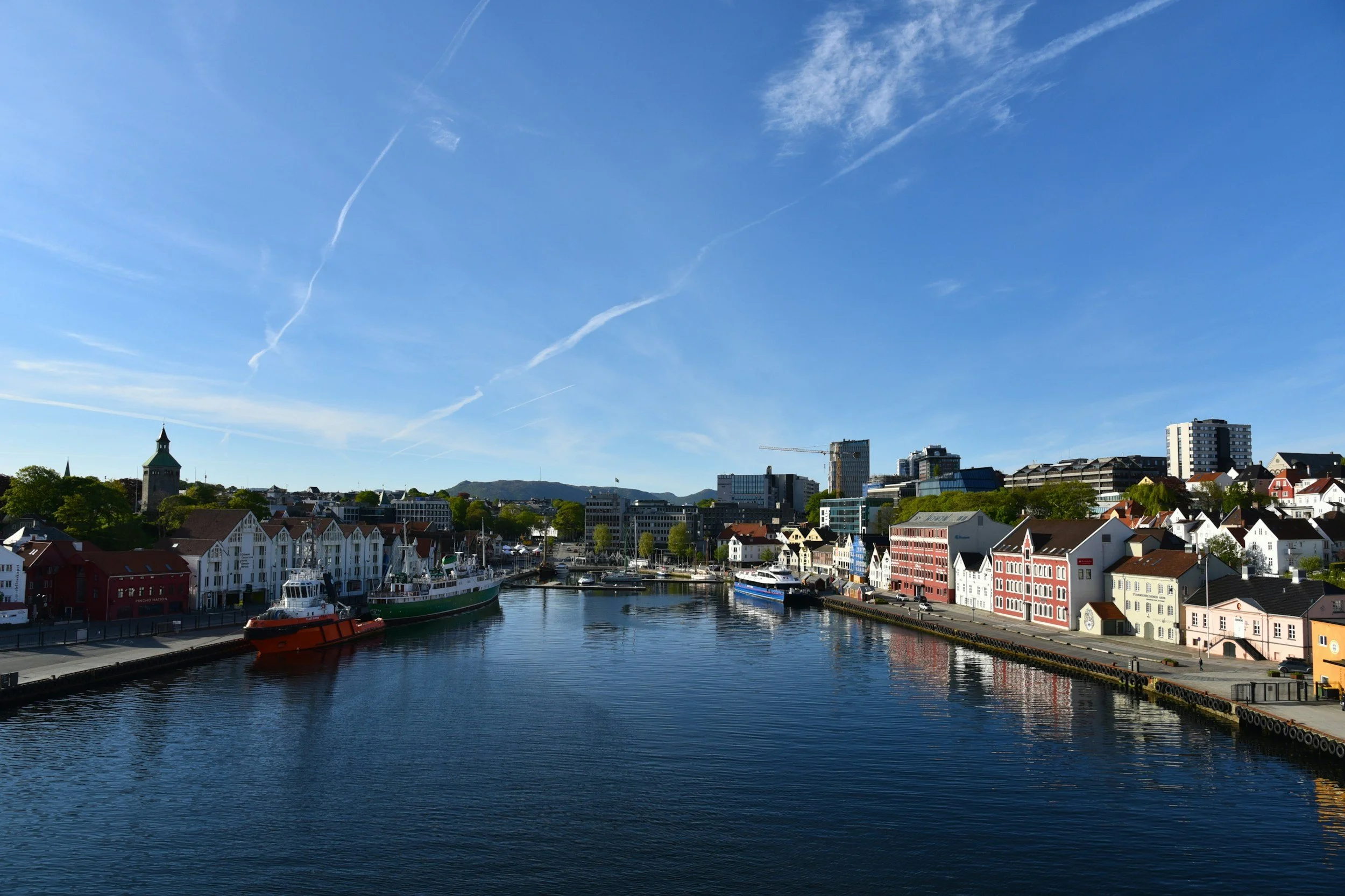
The city wraps around Vågen, the inner harbour. Gamle Stavanger and its white timber lanes climb the west side. Torget and the fish market close the head of the harbour, with the cathedral and the little lake behind it. East of the water the streets get scruffier and better: Pedersgata, Nytorget, and Storhaug beyond. Almost everything in this guide is within a twenty-minute walk of that harbour, and the ground is far flatter than Bergen, which is the first thing anyone arriving from there notices.
Two practical things. Stavanger is wet, though not quite as relentlessly as its neighbour up the coast, and the weather comes in off the North Sea in bands rather than settling: bring a shell, and assume the afternoon will not look like the morning. And the airport is easy. Sola is fifteen kilometres out, the airport shuttle runs regularly and takes twenty-five to thirty minutes into the centre, and it is the simple choice if you are heading for the centre. The local Kolumbus buses stop at the airport too, but they run the Tananger–Sola–Forus corridor rather than straight into town.
Five Neighbourhoods, Briefly
Gamle Stavanger
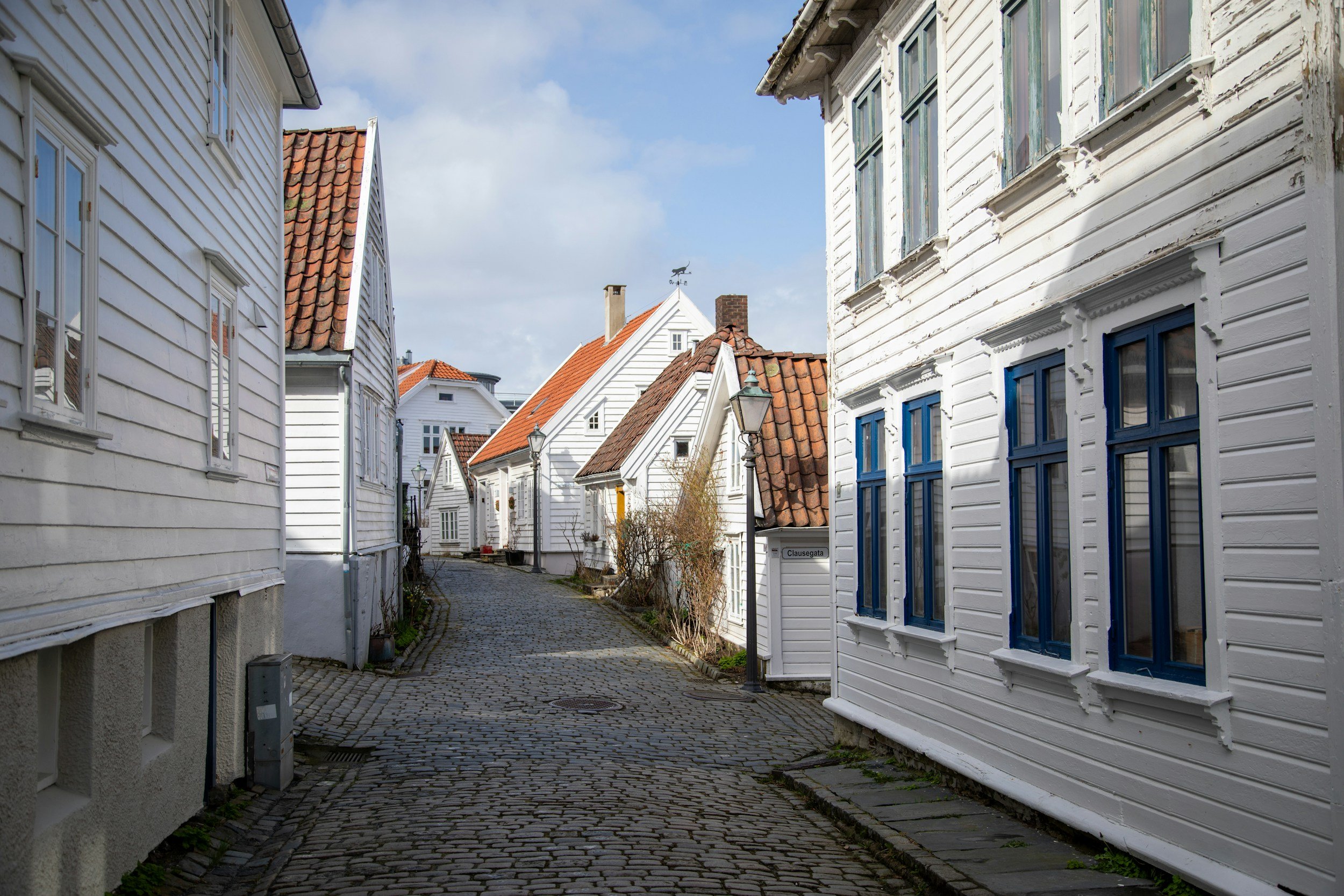
The old town, and the reason a lot of people come. One hundred and seventy-three protected wooden houses from the eighteenth and nineteenth centuries, white weatherboard, cobbles, roses and hollyhocks growing out of eighteen inches of front garden. Øvre Strandgate is the spine. Walk it slowly and then leave it for the lanes above, where there are no cruise groups and people are hanging out washing. IDDIS is up here on Øvre Strandgate, in a real former sardine factory, and it is far more interesting than that sentence makes it sound.
Vågen and Torget
The working middle of the city. Fishing boats and tour boats along Strandkaien, the fish market at the head of the water, and behind it Stavanger Cathedral, begun around 1125 and the only medieval cathedral in Norway still standing in more or less its original form. It reopened in 2024 after a long restoration, in time for the city’s nine hundredth birthday the following year, and it is worth ten quiet minutes. The lake immediately south, Breiavatnet, has a flat path all the way round it and swans that have opinions.
Pedersgata and Storhaug
The old working-class street east of the harbour, once lined with canneries and now the best eating in the region: dozens of food and drink places along one long stretch, from Michelin kitchens to a ramen counter and a fried chicken window. Keep walking east into Storhaug for the Lervig brewery taproom, the Tou arts centre in another old brewery building, and the harbour at Paradis. If you are choosing where to spend an evening, choose here.
Fargegaten and Nytorget
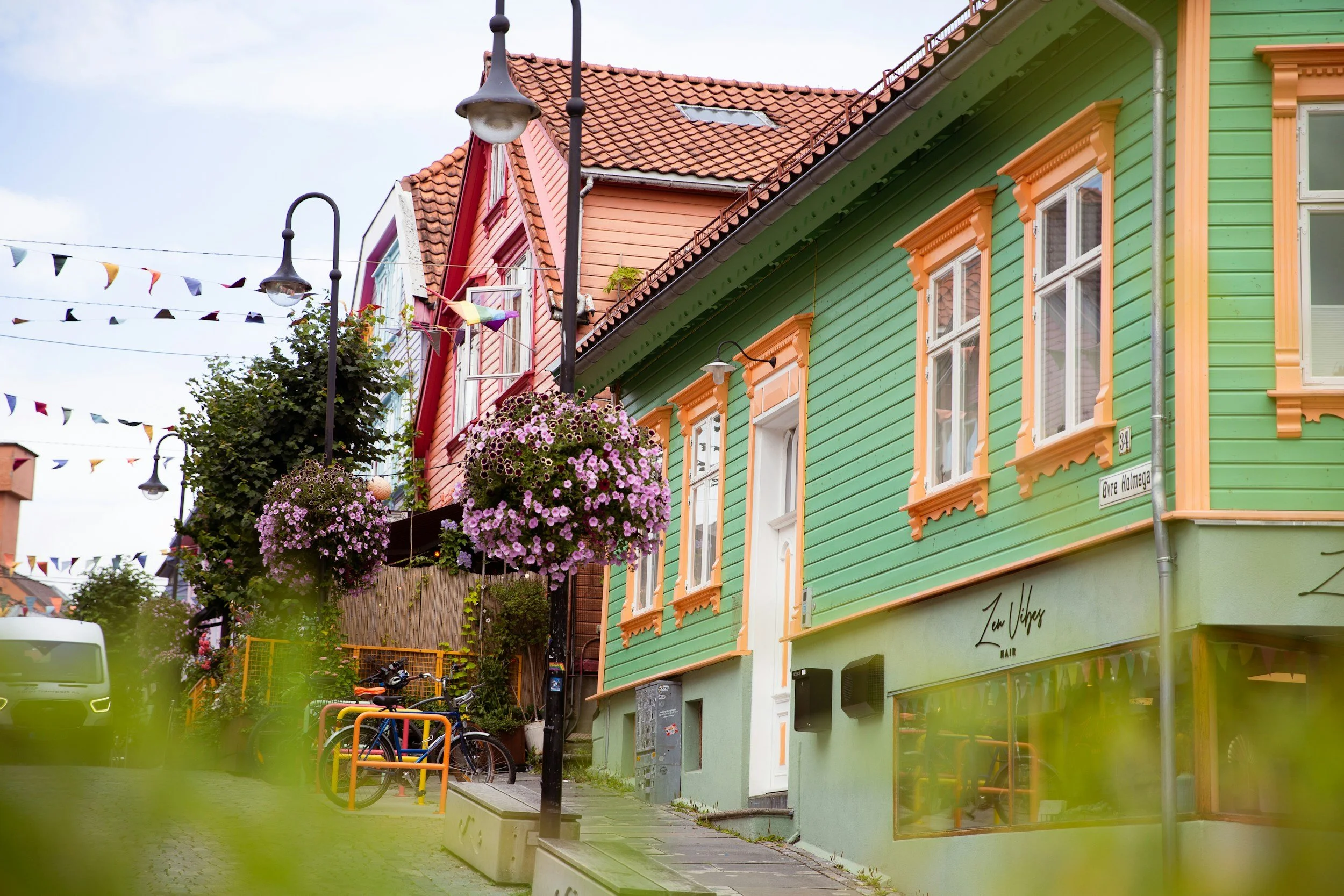
Øvre Holmegate, repainted in the mid-2000s in an attempt to save a dying street, is now the most photographed twenty metres in the city. It works better than it should. Take the picture, then sit down in one of the bars along it. Nytorget, a block away, is the scruffier square where the city actually drinks coffee.
Eiganes and Våland
The residential west and south: big timber villas, the Stavanger Art Museum on the shore of Mosvatnet lake, Ledaal and Breidablikk, the two grand nineteenth-century houses the city museum keeps, and the Våland hill with its old water tower and the best free view in Stavanger.
Where to Eat
Stavanger eats extremely well for its size, and has done since long before the Michelin inspectors noticed.
RE-NAA, in the Eilert Smith Hotel down by the harbour, is the anchor: three stars, the first restaurant in Stavanger to reach Michelin’s highest distinction, and a long tasting menu built on Rogaland’s coast and farmland. Book months out. Below it sit three one-star kitchens, all different. Sabi Omakase on Pedersgata was Norway’s first starred sushi restaurant and runs a counter of twenty-odd courses. K2, a few doors along the same street, cooks a short seasonal menu out of an open kitchen. And Hermetikken, up on Niels Juels gate in the old cannery district beside Ledaal, does a seasonal set menu under Stuart Barber. If the tasting-menu evening is not the one you had in mind, Renaa’s own answer is Matbaren at Breitorget, a first-rate French bistro out of the same kitchen and a far easier table to get. It opens at four on weekdays and closes on Sundays.
For very good food without the tasting-menu commitment, Pedersgata again: Bravo for Scandinavian cooking and a proper wine list, Broken for modern Norwegian seafood, Bellies for the best vegan food in this part of Norway, An Nam for Vietnamese, Kansui for ramen. Söl, on Hetlandsgata just off Pedersgata, is three young chefs cooking a six-course vegetable-forward menu against one of the strongest natural wine lists in Norway. It and Tango sit in the Michelin guide without stars and are both a reliable evening out.
Cheaper and just as good: Fisketorget at the fish market for fish soup at lunch, Fish & Cow for a brasserie plate by the water, Ostehuset for open sandwiches and cheese, Hekkan Burger for the local hamburger, Molinå for sourdough, and Siddis Gelato for when the sun makes one of its appearances.

Coffee, and What to Eat With It
Stavanger has no signature bun the way Bergen does. What it has instead is a seriously good coffee scene for a city this size, and a hundred years of sardine canning that still turns up on menus as smoked fish on rye.
Kokko on Østervåg is the one to seek out: a roastery over three floors, designed by an architect who clearly cared. Bøker og Børst on Fargegaten is the opposite and equally necessary, a bar-café full of books and board games where nobody minds how long you sit. Ostehuset does the best breakfast in the city, and Ostehuset Øst out on Ryfylkegata is worth the walk. Sirkus Renaa, in the Sølvberget culture house, bakes sourdough pizza and pastry under the same roof as the library. Micro Kaffi on Nytorget is tiny and takes its beans seriously. Godt Brød is the dependable default, and Steam on Klubbgata does coffee and gelato for the days when you cannot decide.

Museums Worth the Time
The Norwegian Petroleum Museum is the one to do even if the subject sounds like homework. It sits on the harbour in a building shaped like the thing it describes, explains how a poor fishing country became a rich one in about fifteen years, and is unusually honest about the climate arithmetic. Adults 180 NOK, students 90, children 60.
IDDIS, in Gamle Stavanger, is the other half of that story, from before the oil, and it is two museums on one ticket. The Norwegian Canning Museum occupies a working cannery from 1916, and on smoking days they fire the ovens and hand out warm brisling. The Norwegian Printing Museum beside it is the better surprise: presses, type and a print shop explaining that the colourful tin labels which made Stavanger sardines a national export were an industry in themselves, and that the city printed about as hard as it canned. The name is the proof: iddis is old Stavanger for a sardine label, a local mangling of etikett. Adults 170 NOK, students and under-eighteens free, open daily ten to four, and the ticket covers the other city museums the same day. The Stavanger Maritime Museum a few doors along covers two hundred years of shipping from a pair of old merchant warehouses.
The Stavanger Art Museum sits out by Mosvatnet with the Lars Hertervig collection and a good temporary programme, and pairs neatly with a walk round the lake. At Ullandhaug, the Archaeological Museum and the reconstructed Iron Age Farm cover the several thousand years before any of the above. Out of town, Utstein Monastery on Mosterøy is the best-preserved medieval monastery in Norway, about forty minutes away by car through the undersea tunnels.
Parks, and Places to Sit
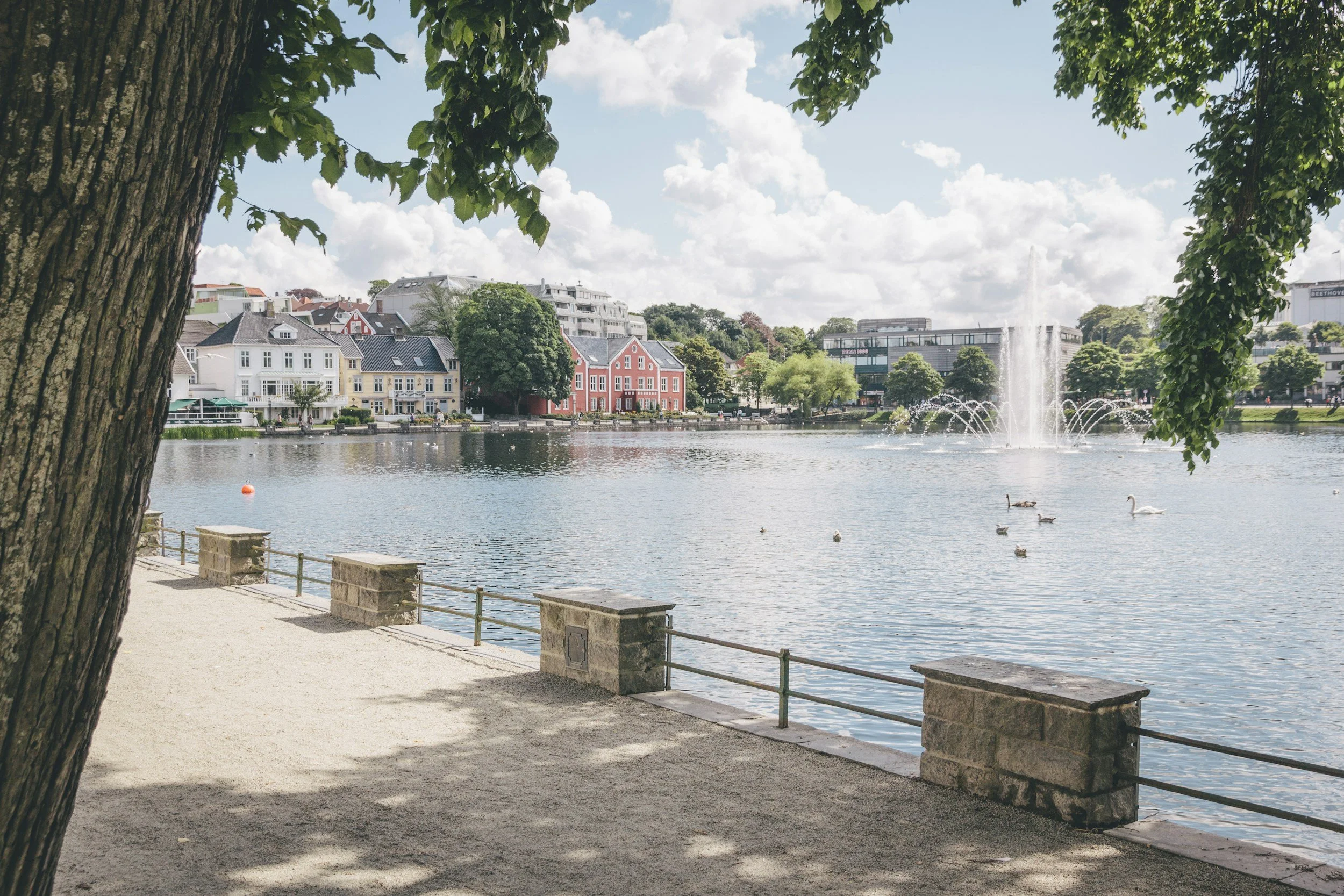
Byparken, around Breiavatnet in the middle of town, is the formal one: the cathedral on one side, flowerbeds, and a lap of the lake that takes fifteen flat minutes. Mosvatnet is the local walk, a little over three kilometres round a lake on a gravel path, with prams, runners and the art museum on the bank.
Vålandsskogen, the wooded hill south of the centre, has the old water tower at the top and a view over the whole city to the fjord. Sørmarka, further out, is eight kilometres of forest trail and where people go to run. Bjergstedparken by the concert hall is the summer picnic spot, and the coastal path along Gandsfjord from Badedammen out past Godalen is the best flat hour in the city if you want water on one side the whole way.
The Active Half of Stavanger
Stavanger is a base as much as a destination, and the two big days out are both worth the logistics.
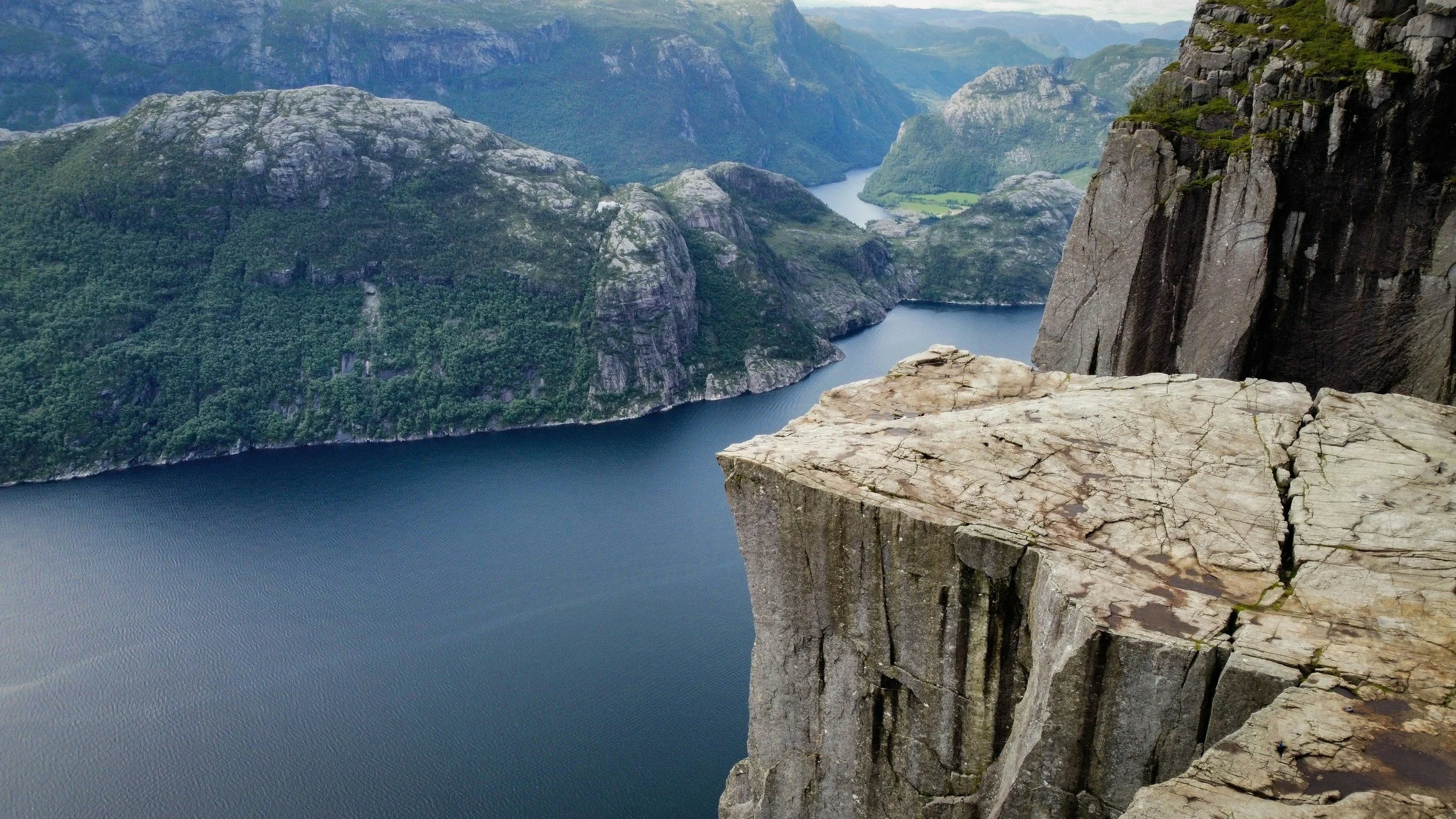
Preikestolen is the reason most people book the flight. The cliff stands 604 metres above Lysefjord, and the walk is about four kilometres each way with 350 metres of climbing: roughly four hours return at an ordinary pace. It is popular, it is rocky, and it is not a stroll. Proper shoes, water, and a look at the forecast. The Preikestolen bus runs from Byterminalen between May and September from around 498 NOK return, and by car it is about forty minutes through the Ryfylke tunnel. Go early or go late; the middle of the day in July is a queue.
The Lysefjord cruise is the low-effort version and no less good: three to three and a half hours on an electric catamaran from Strandkaien, around 890 NOK for adults, year-round. It passes under Preikestolen from below, noses into the Hengjanefossen waterfall until the spray reaches the deck, and stops at Fantahålå, the cave where outlaws used to hide from the sheriff. If you only have one day and the sky is grey, take the boat. For something bigger, Kjerag and its wedged boulder is a longer, harder day further up the fjord and needs a car or a tour.
Closer in, the city swims. Vaulen and Godalen on Gandsfjord are the two everyone uses, Badedammen is a seawater pool under the city bridge, and Møllebukta by the Swords in Rock monument is shallow and good with children. Gamlingen is a heated outdoor 25-metre pool that stays open all year, which in February is a genuinely strange and excellent experience.
Then the saunas, which have become part of the weekly rhythm here as much as anywhere in Norway. Damp runs floating wood-fired saunas off Storhaug, BookSauna has several more around the city and out at Hundvåg, and most cost somewhere between 200 and 300 NOK a head. Book ahead; drop-in almost never works.
And the beaches. Solastranden, ten minutes from the airport, is a long white curve that regularly turns up on European best-beach lists, and the Jæren coast south of it, Borestranden and Orrestranden, is where the surfers and kite crowd go. The Swords in Rock at Hafrsfjord, three ten-metre bronze swords driven into the rock to mark the battle fought here, traditionally dated to 872 and long associated with the unification of Norway, is an easy bike ride out along the water. And if you are here in September, Nuart has been painting large murals across the east of the city since 2001 and runs walking tours of them.
Before You Go
Norway is effectively cashless and a card or a phone covers everything, including the smallest coffee. Book the Preikestolen bus and the fjord cruise online in high season, and check whether a cruise ship is in port that morning, because the difference in queues at the fish market and in the old town is dramatic. Alcohol is expensive and sold in shops only until early evening, earlier on Saturdays and not at all on Sundays. Restaurants on Pedersgata fill up on Fridays; book two or three days ahead and you will be fine.
Two days covers the city comfortably. A third lets you add Preikestolen or a proper Lysefjord day without cutting anything out of the first two.
Frequently Asked Questions
Is two days enough for Stavanger?
For the city itself, comfortably. Two days cover the old town, the harbour, one or two museums, a swim or a sauna and two good dinners. Add a third if you want Preikestolen without rushing the rest.
Preikestolen or the Lysefjord cruise?
Preikestolen if you want the walk and the photograph and have a clear forecast. The cruise if the weather is uncertain, you are short on time, or you would rather see the cliff from below with a coffee in your hand. Doing both in one day is possible in summer and not much fun.
When is the best time to visit Stavanger?
May to September, with late May and early September giving you the same light and far fewer people. The Preikestolen bus runs in that window. Winter is dark and wet but the city works well in it, and Gamlingen and the saunas are better in the cold.
Do I need to book restaurants in advance?
For RE-NAA, months. For the one-star kitchens, weeks. For everything else on Pedersgata, a couple of days is plenty, and lunch rarely needs booking at all.
Is Stavanger walkable?
Almost entirely, and it is much flatter than Bergen. The centre, the old town, Pedersgata and the harbour are all within twenty minutes of each other on foot. You will want a bus or a bike for Ullandhaug, Hafrsfjord and the beaches.
Bergen or Stavanger?
Bergen is the more dramatic city and the better base for the long fjords north. Stavanger is smaller, flatter, sunnier, eats better for its size, and puts Preikestolen and Lysefjord within an hour. If you have one weekend and want to walk somewhere famous, come here.
Is it worth going if it rains?
Yes. The museums, the market hall, the coffee places and the saunas all exist because of the weather, and the old town in the wet, with the white boards dark and the cobbles shining, is better than it is in flat sunshine.
