
48 Hours in Bergen: A City Guide to Norway’s Fjord Capital
Where to walk, eat, swim and climb in the two days most people give Bergen, and how to use them properly.
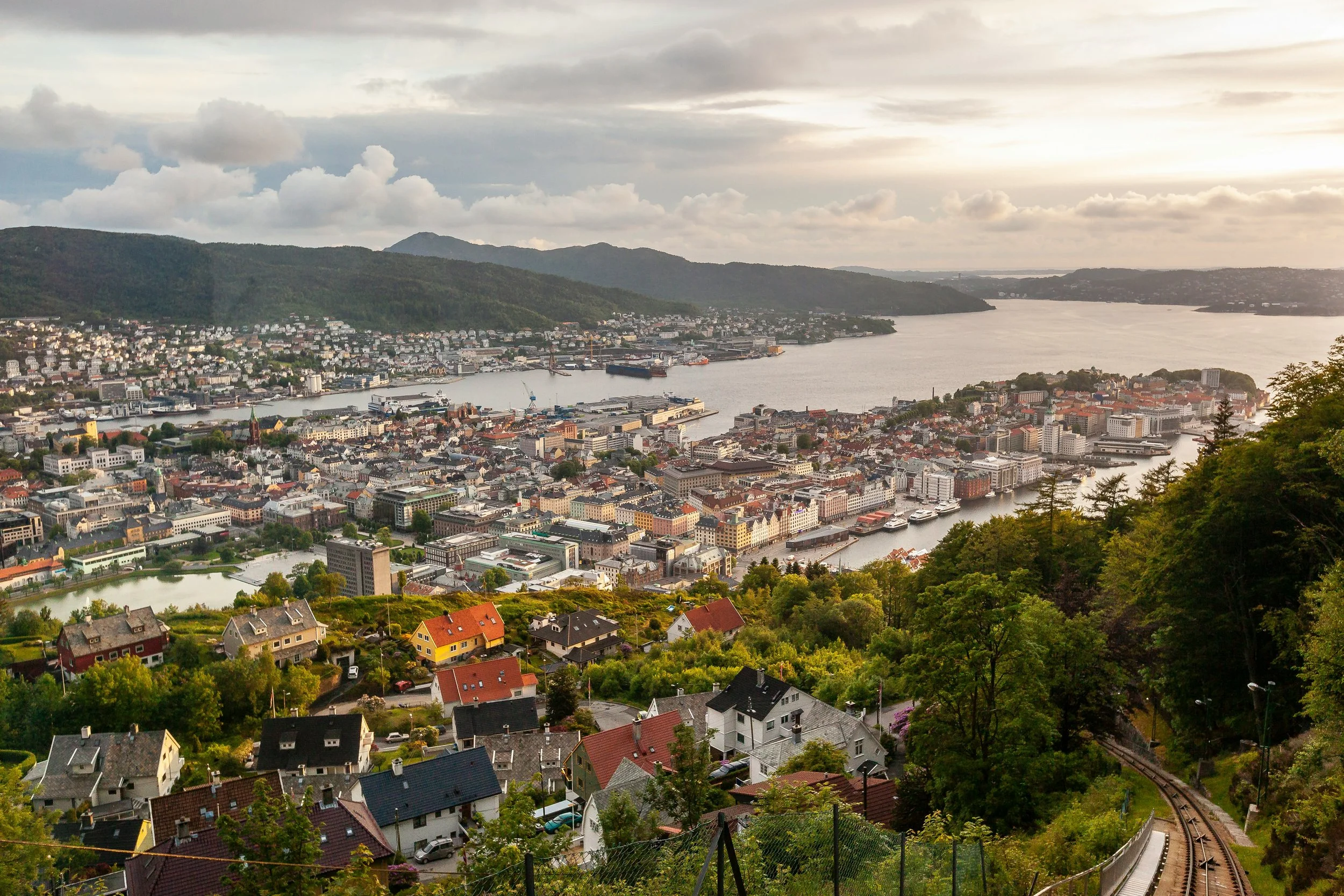
Bergen is a city you can cross on foot in twenty minutes and still not finish in a week. It sits in a bowl between seven mountains and the sea, which means every street either climbs or ends at water, and the weather usually changes while you are deciding what to do about it.
Most travellers get two days here, usually attached to the front or the back of a fjord trip. Two days is enough, if you spend them properly. The short version: stay in the centre, treat the funicular and the cable car as transport rather than attractions, eat seafood at least twice, and protect one long walk from the rest of the itinerary. Bergen rewards being outside far more than it rewards queueing.
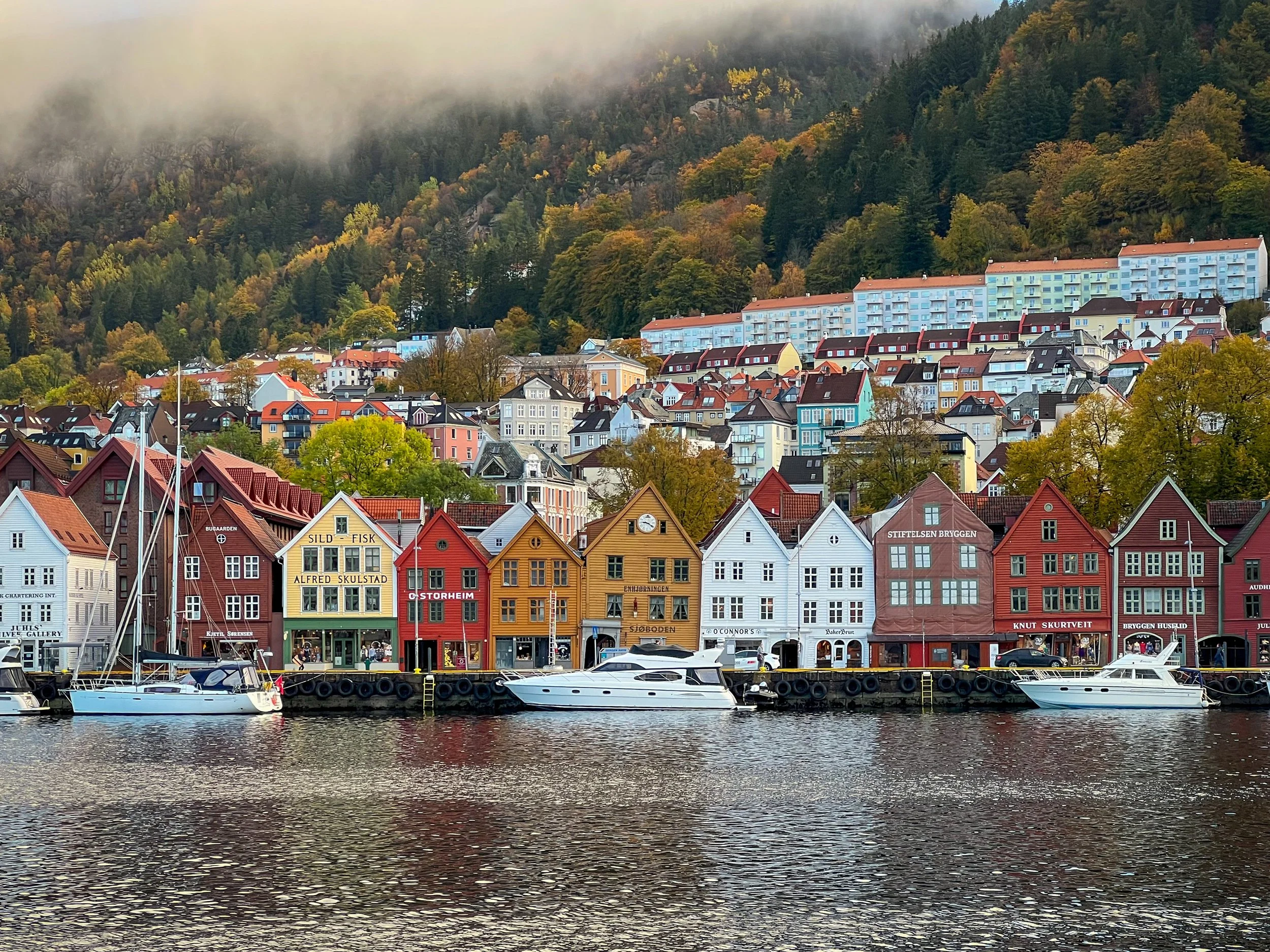
First, Get Your Bearings
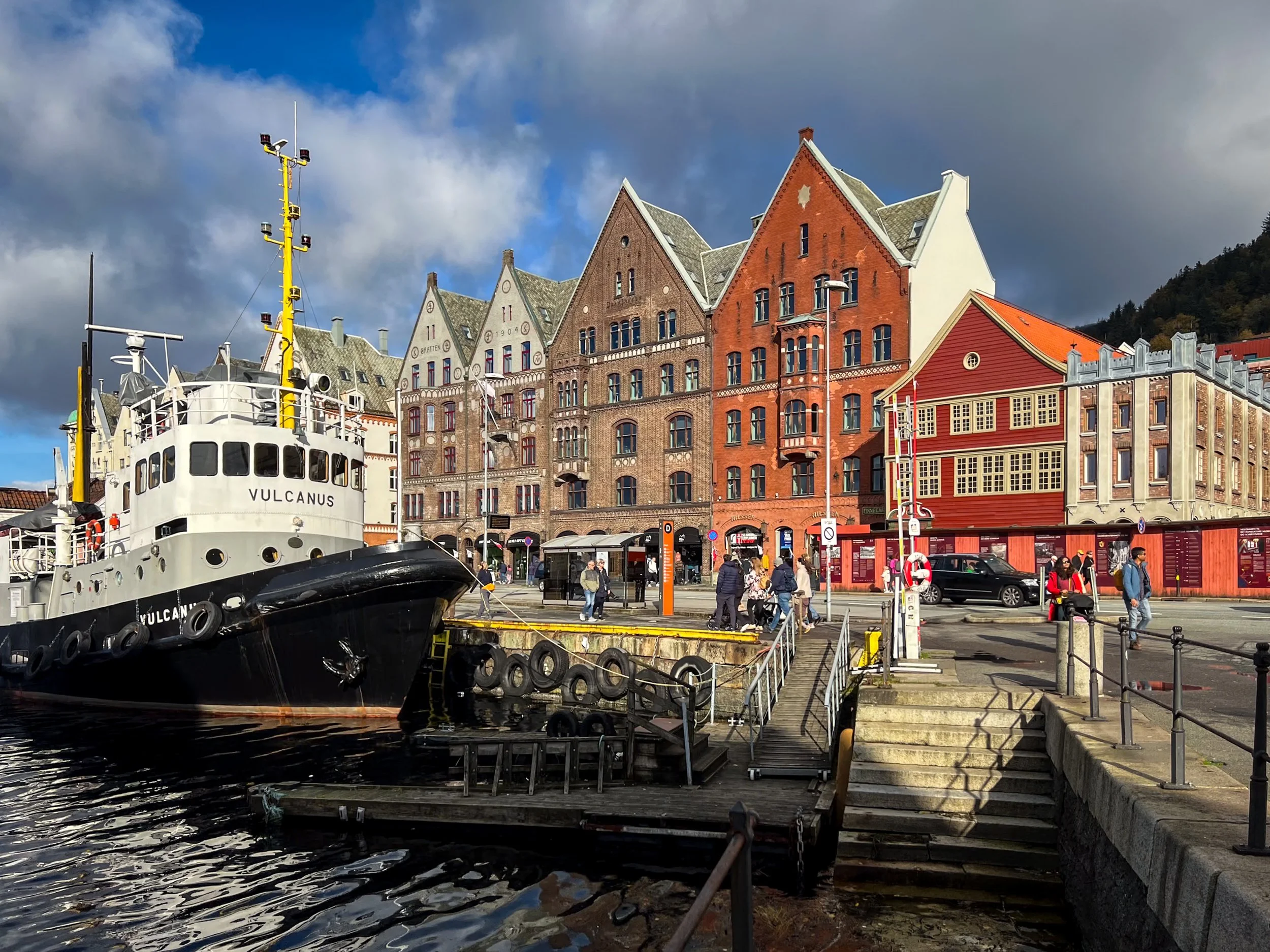
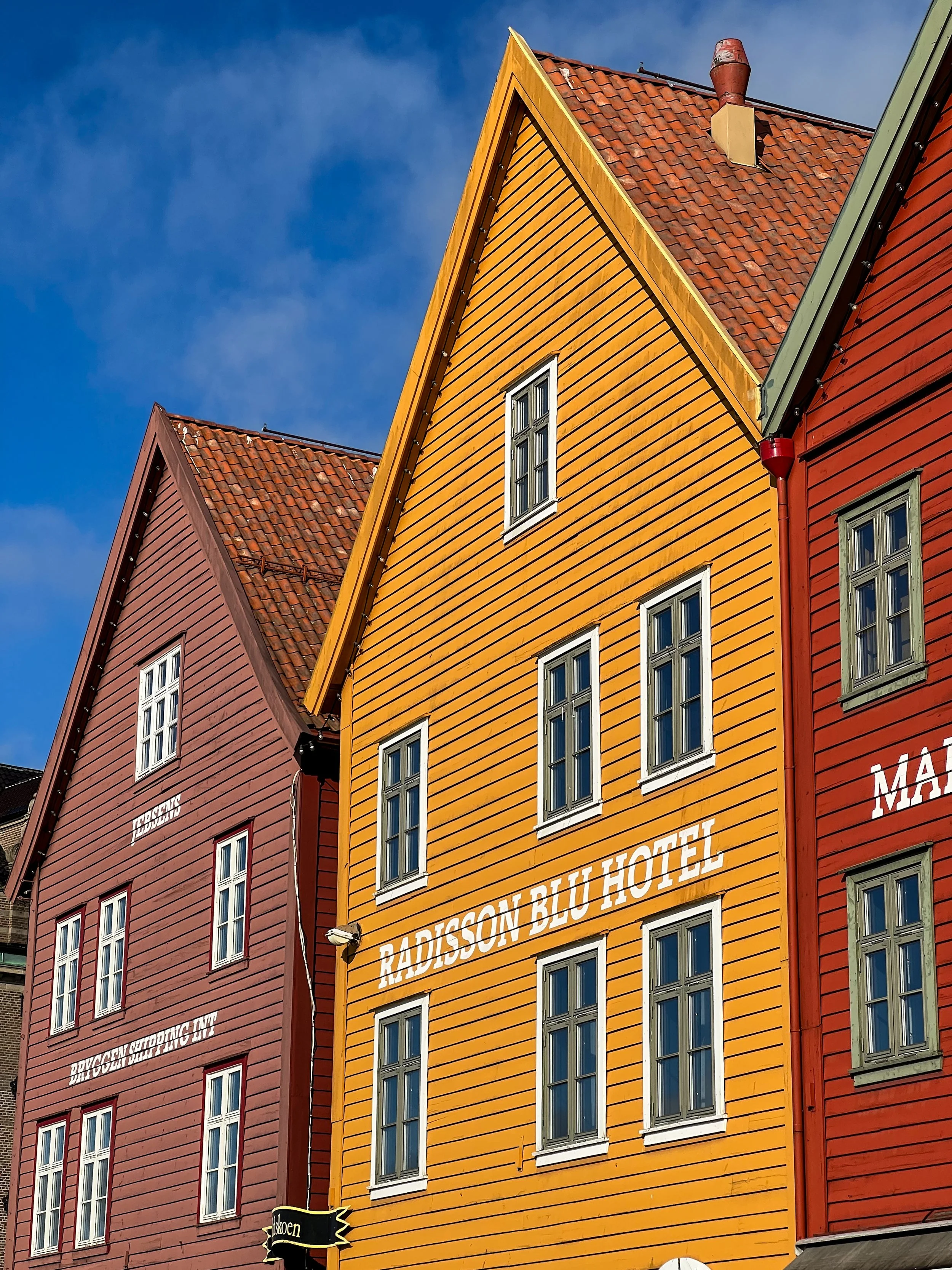
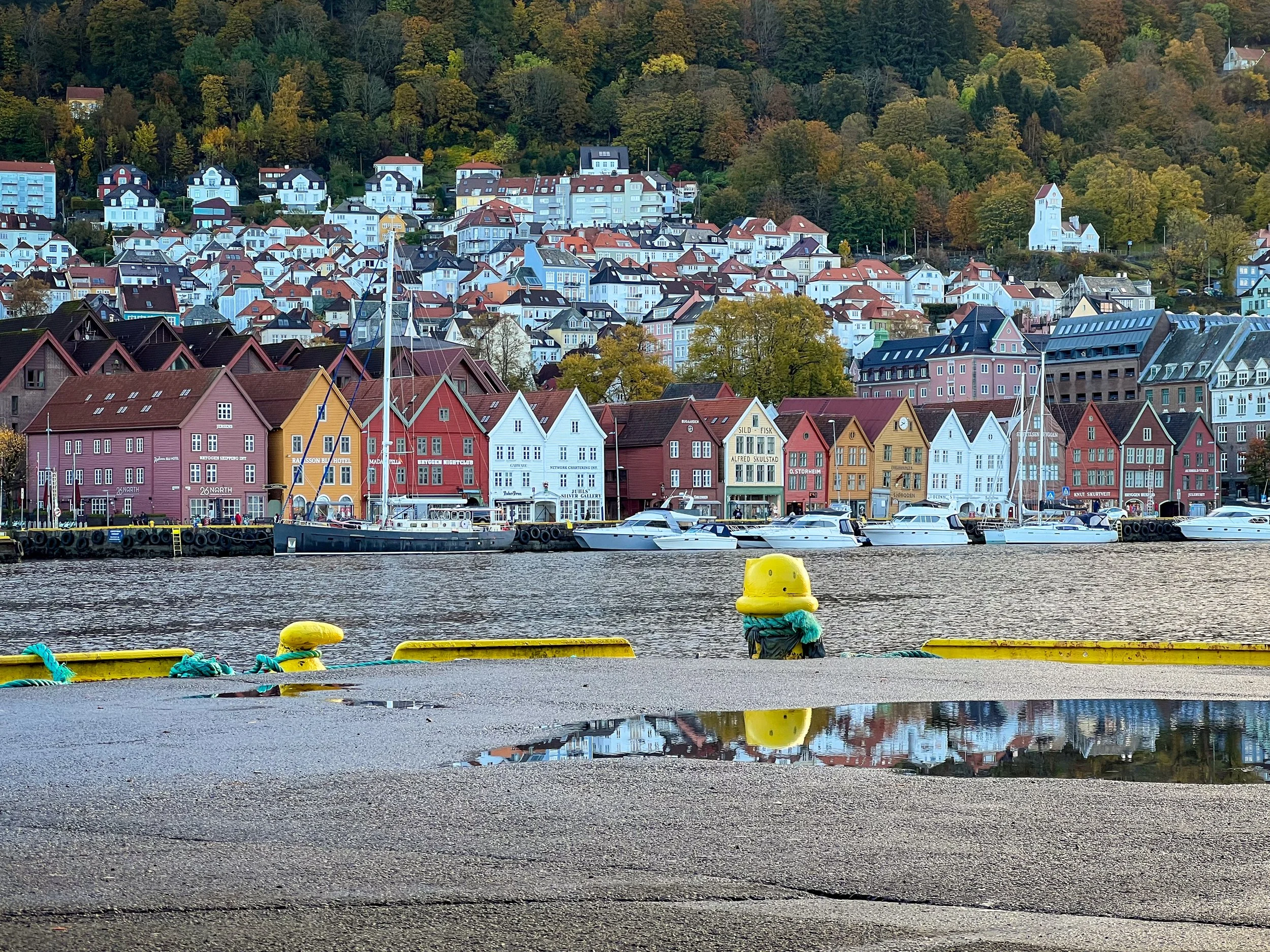
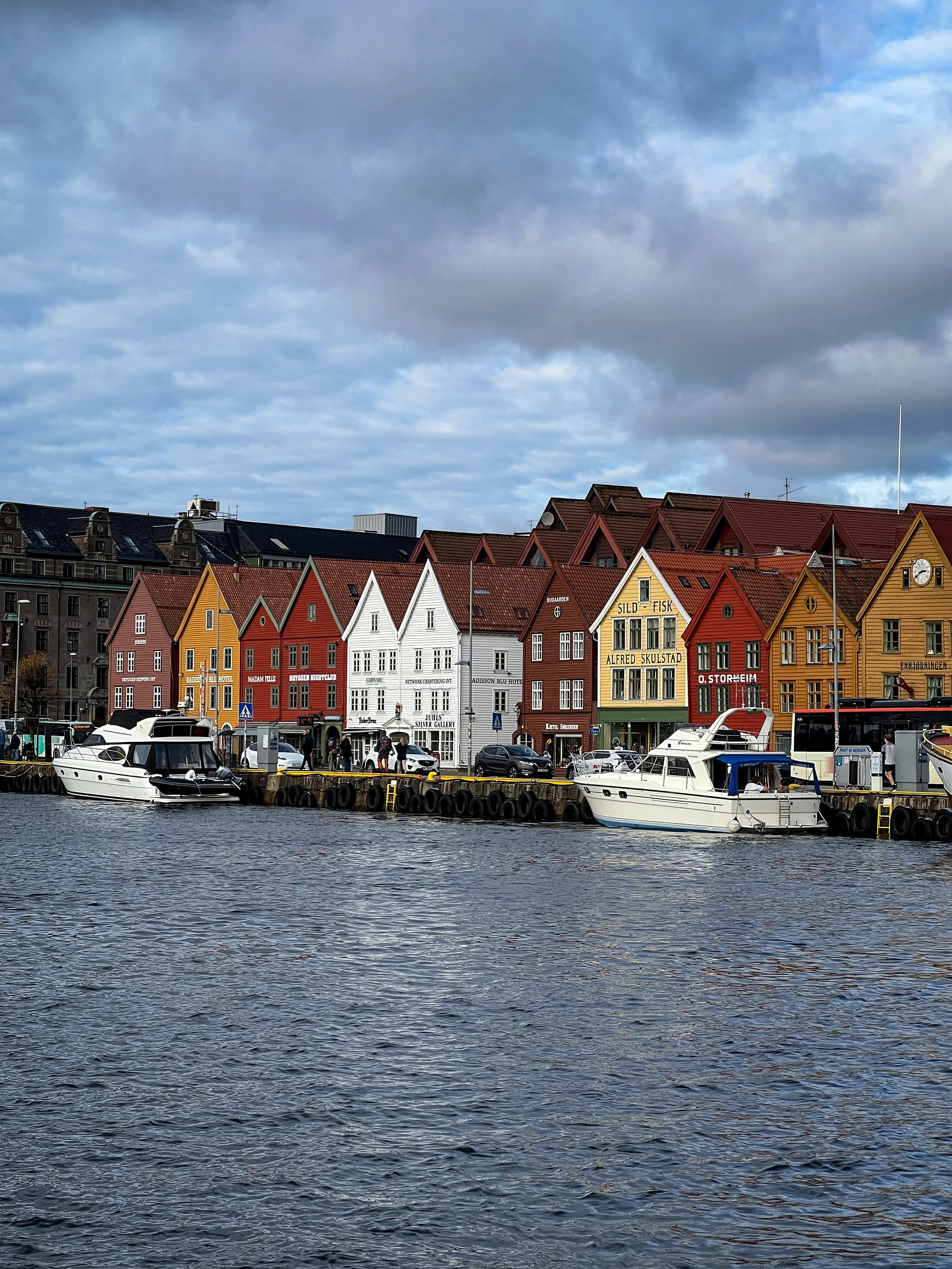
The city wraps around Vågen, the inner harbour. Bryggen and its row of leaning wooden gables sit along the north-east side. Torget and the fish market close the head of the harbour. The Nordnes peninsula runs out to the south-west, and Bergenhus fortress guards the mouth. Almost everything in this guide is within a twenty-five minute walk of that water, with the exception of Grieg's villa and the tops of the mountains.
Two practical things. Bergen is one of the wettest cities in Europe, with rain on well over half the days of the year, and nobody local rearranges their plans around it: bring a proper shell and waterproof shoes. And the airport is easy. The Bybanen light rail runs from Flesland into the centre in about forty-five minutes for the price of an ordinary transit ticket.
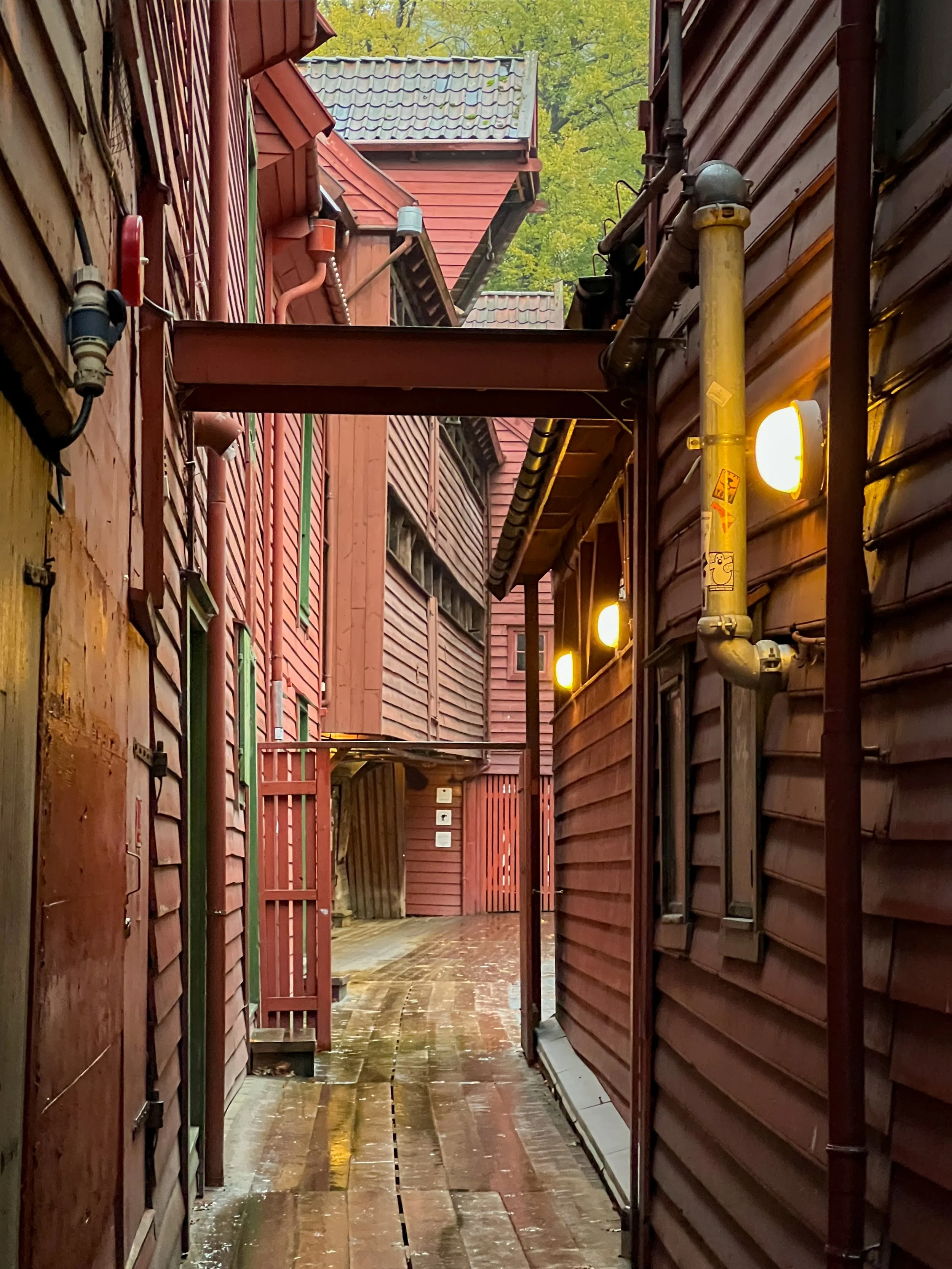
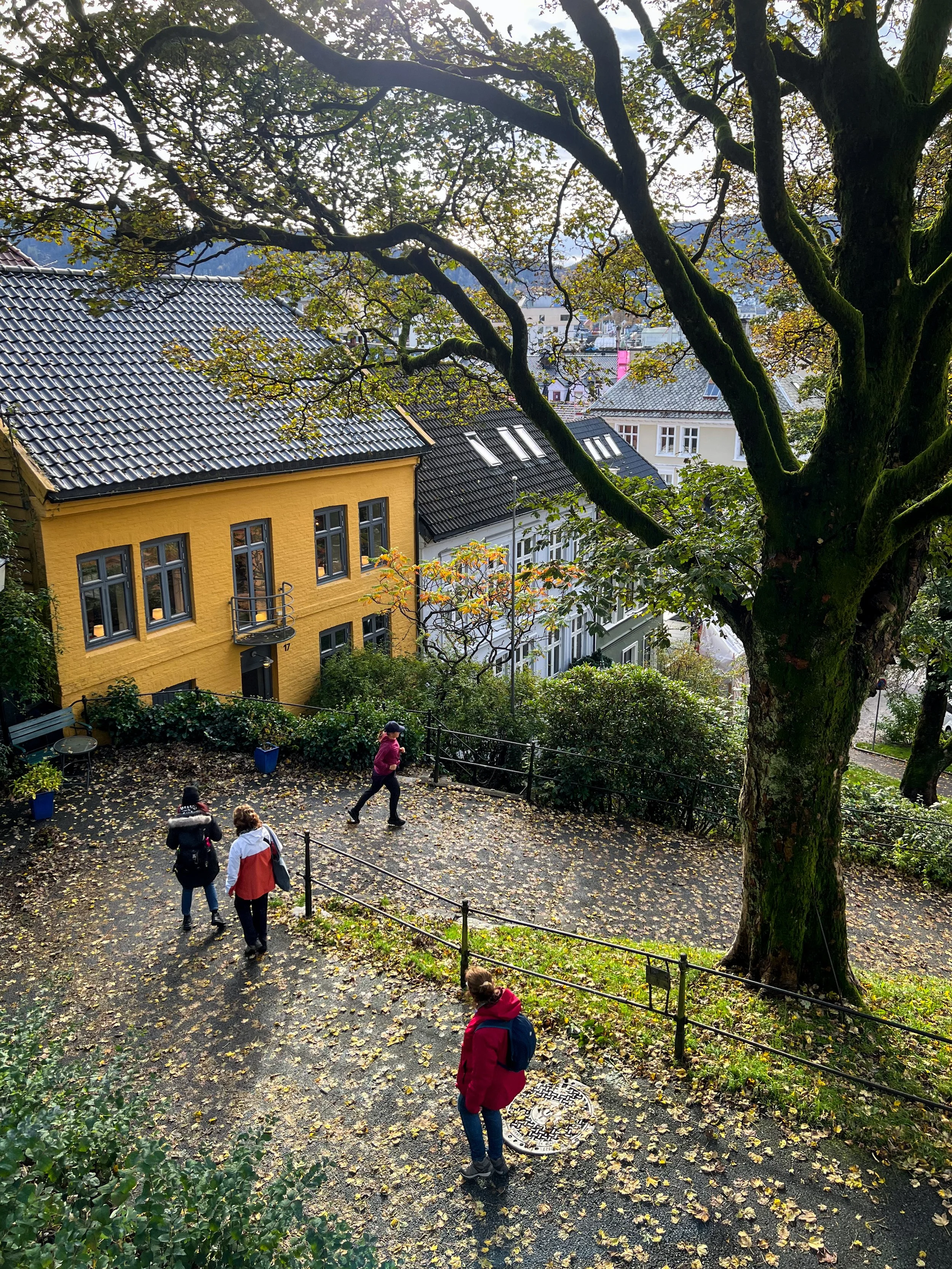
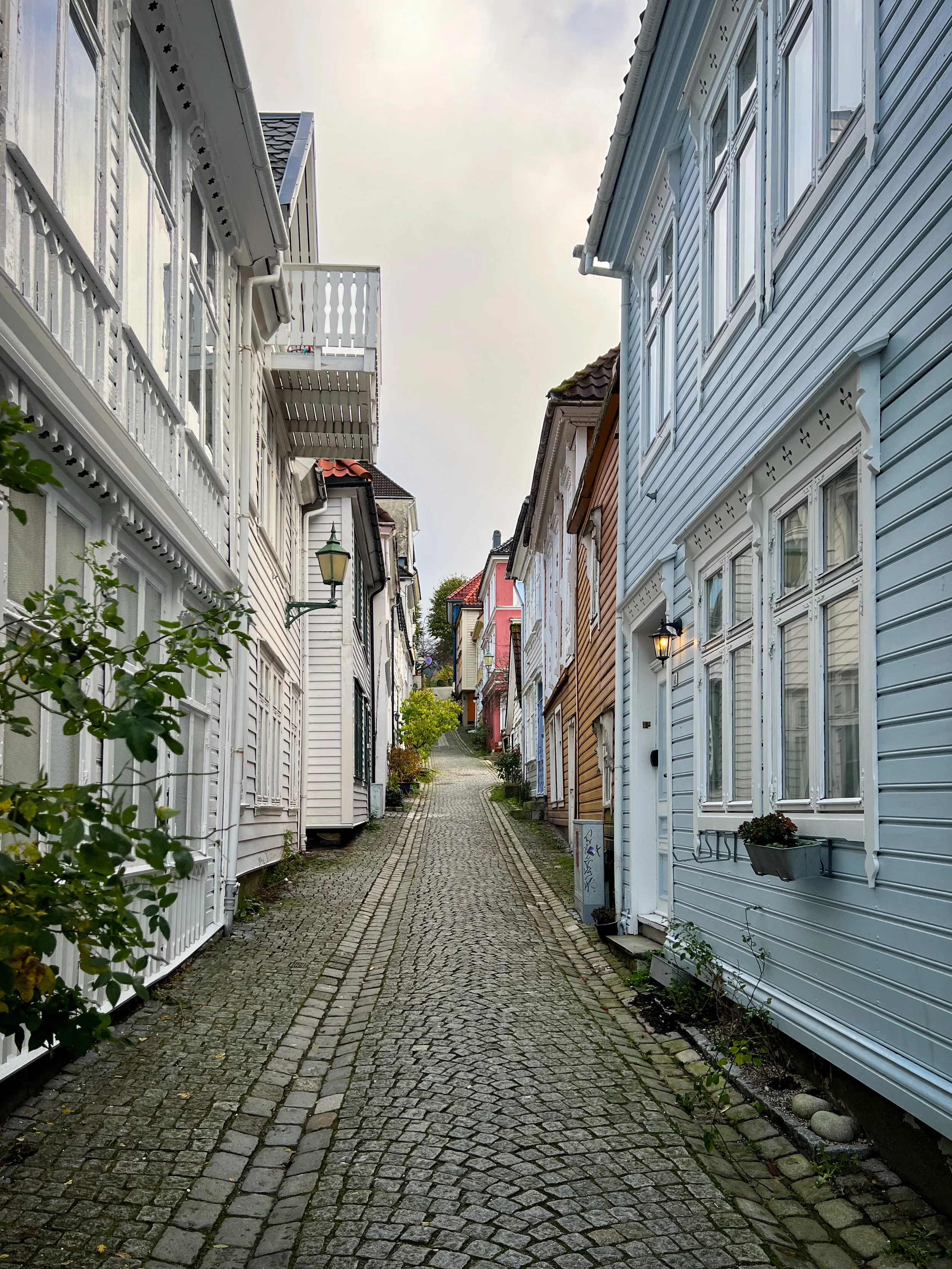
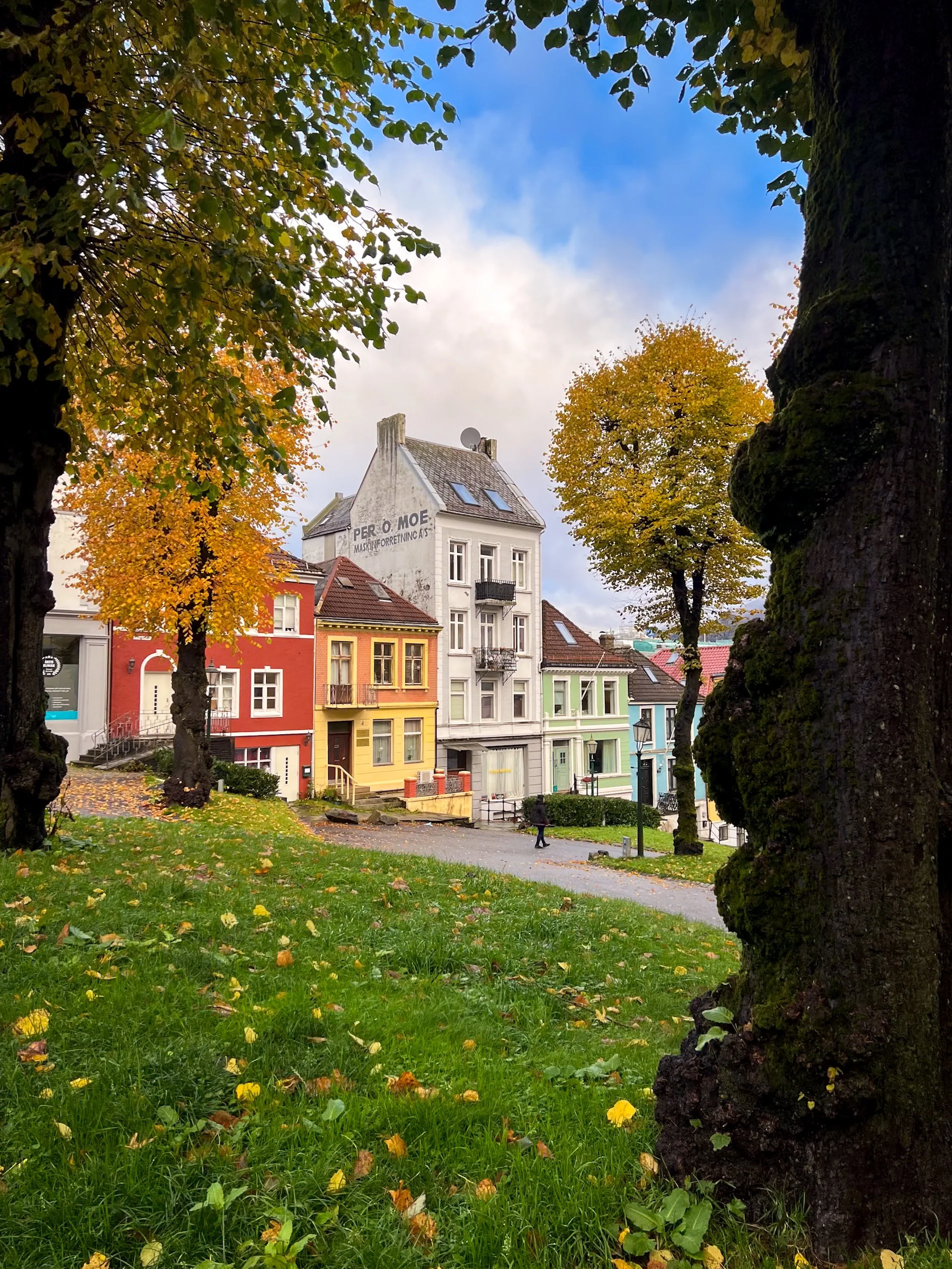
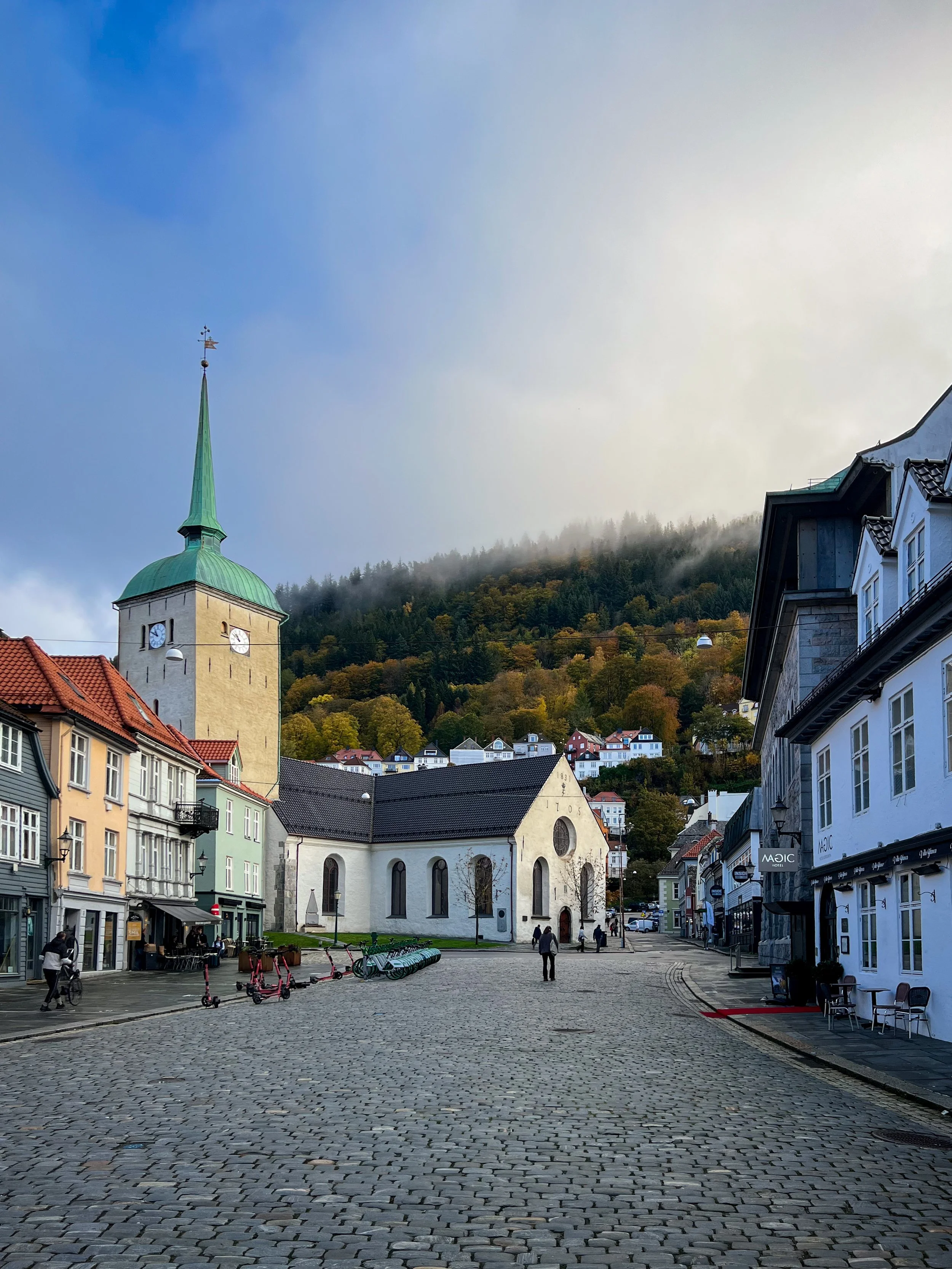
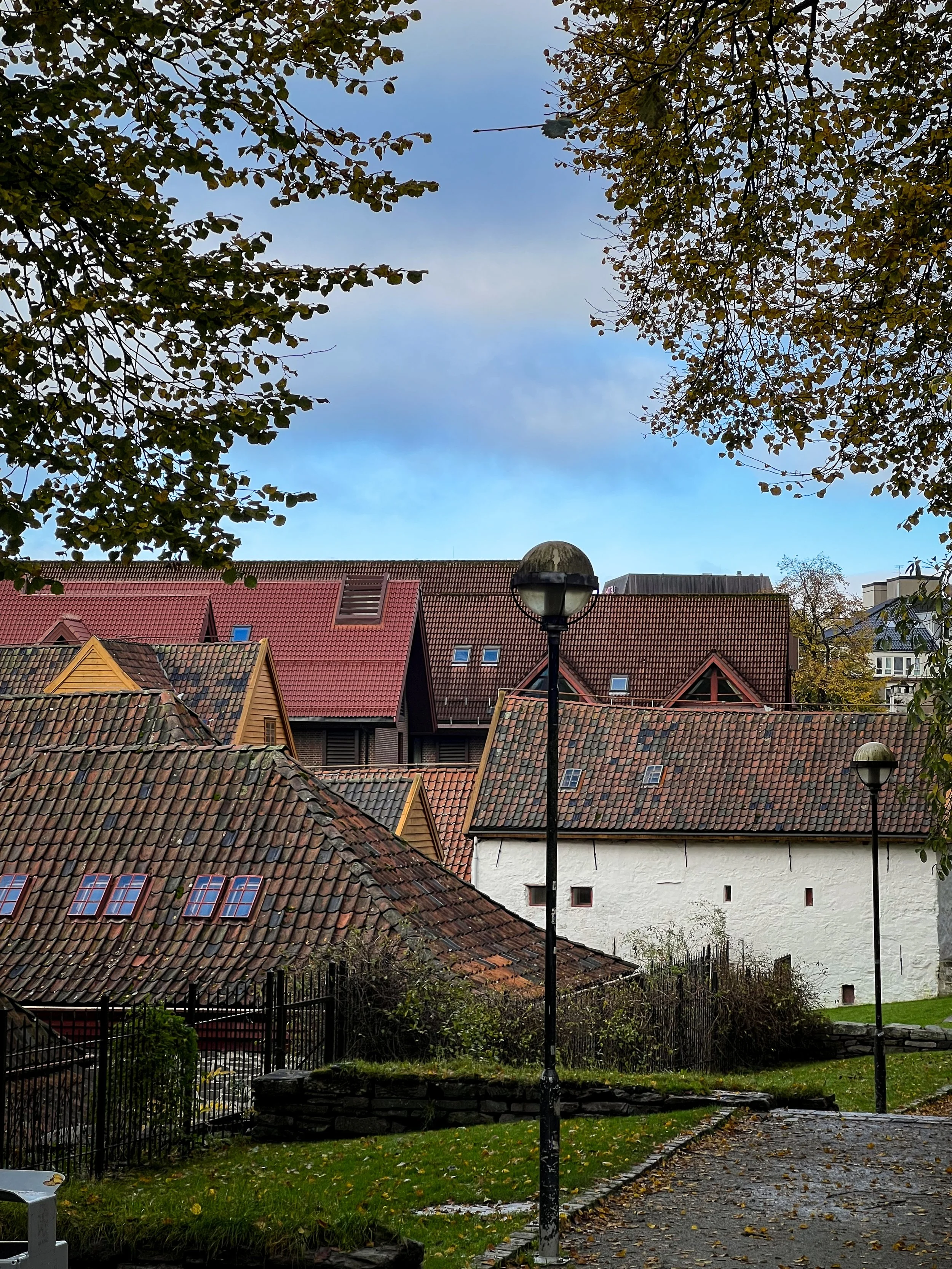
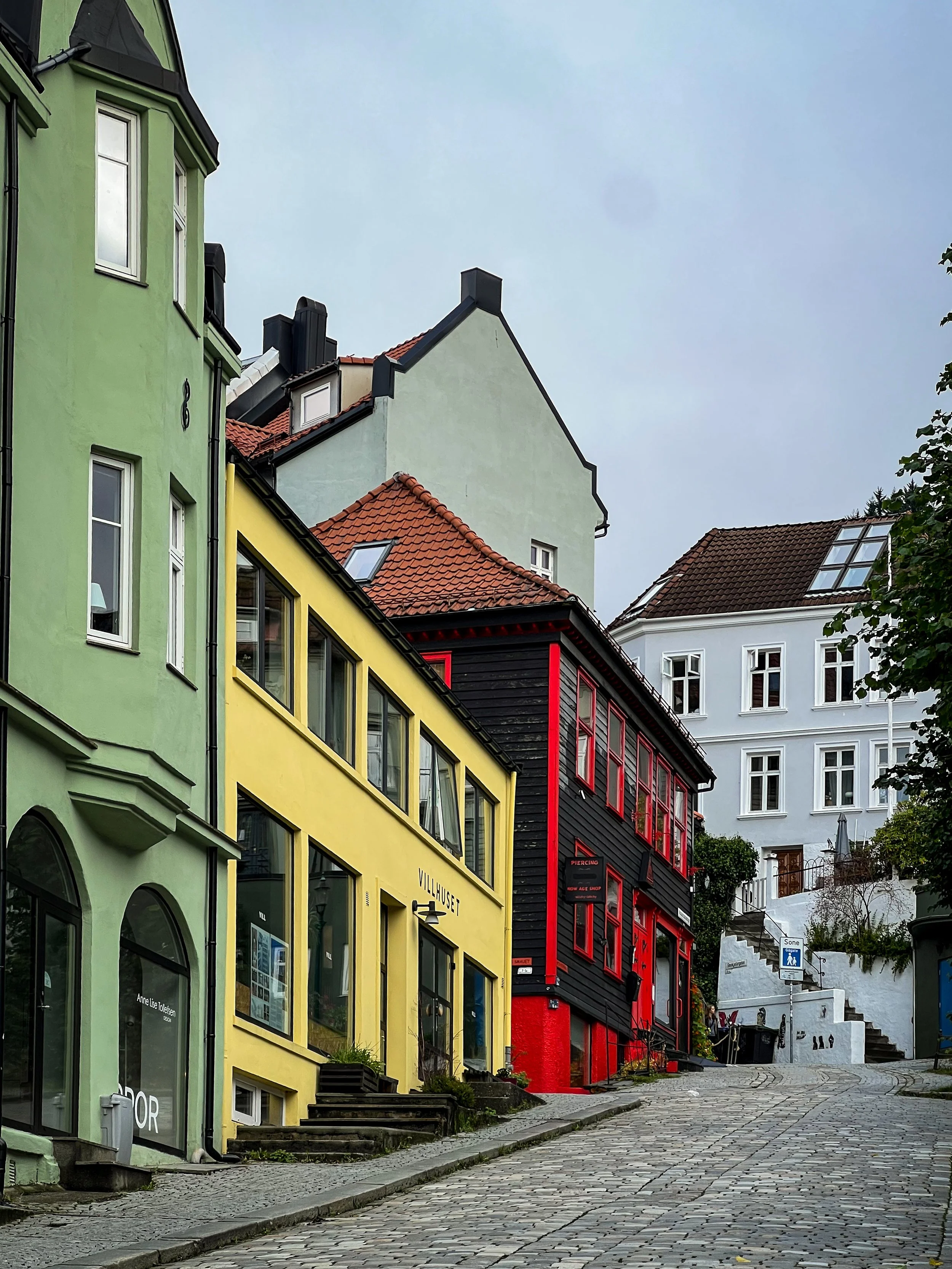
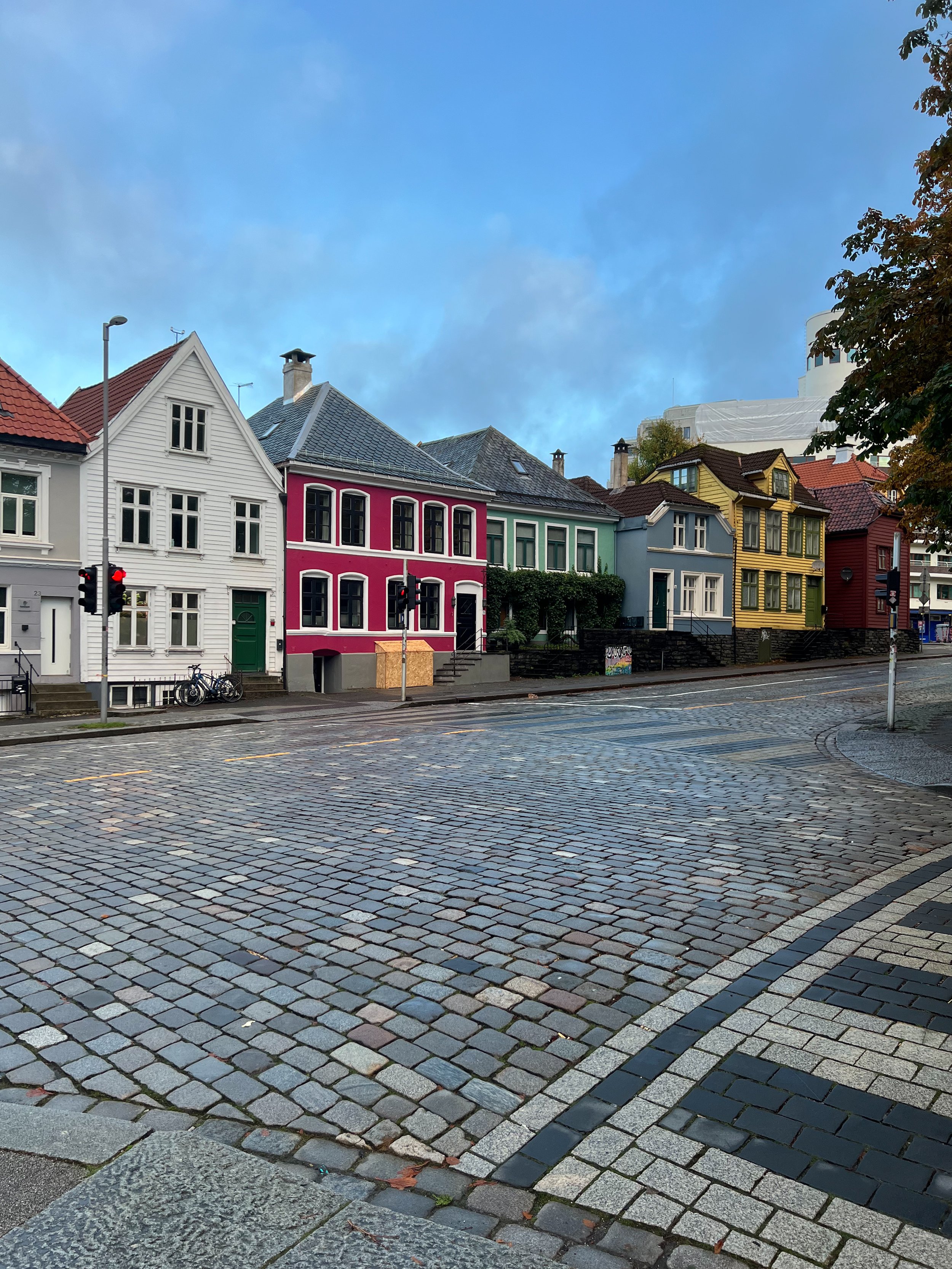
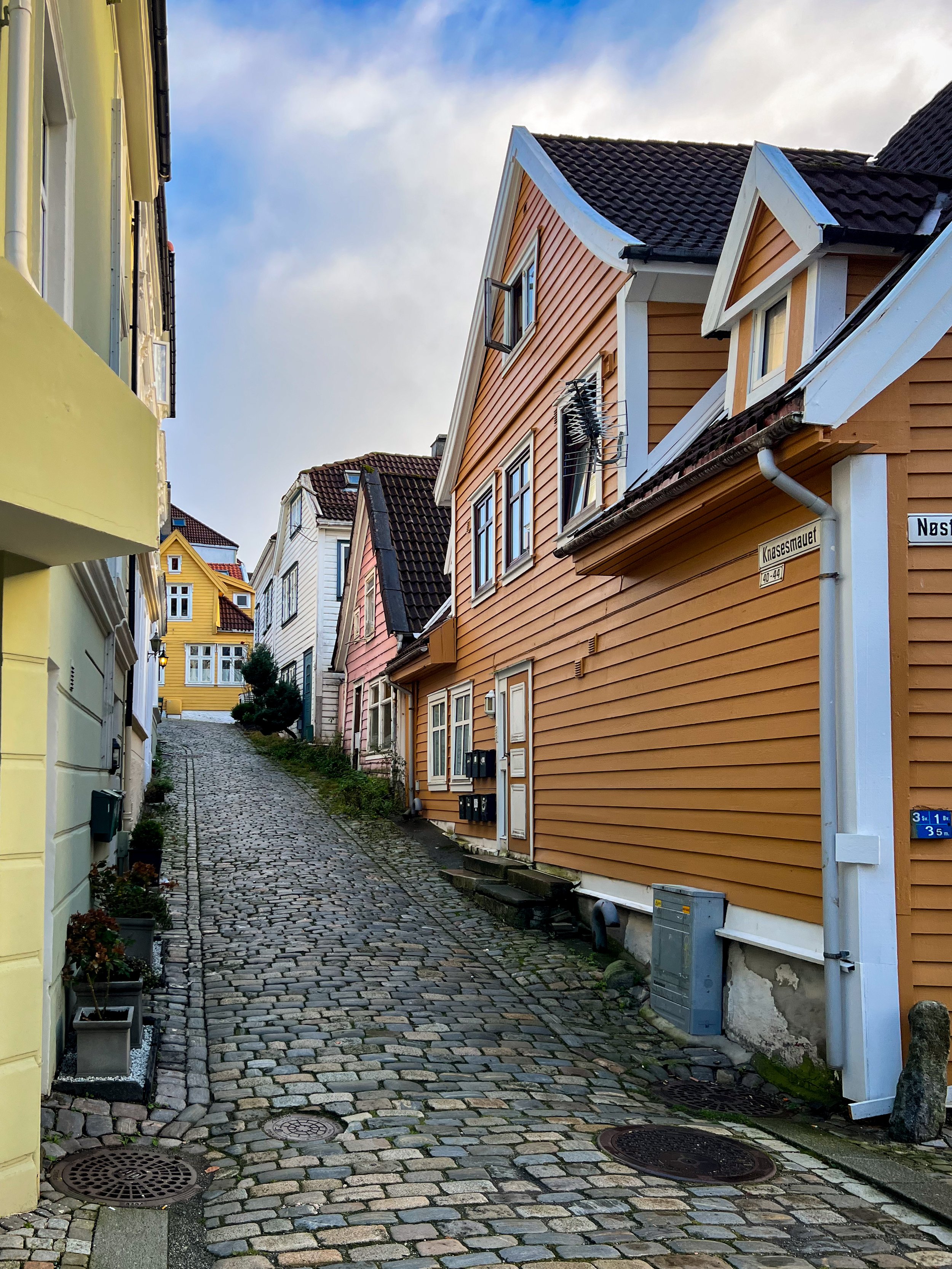
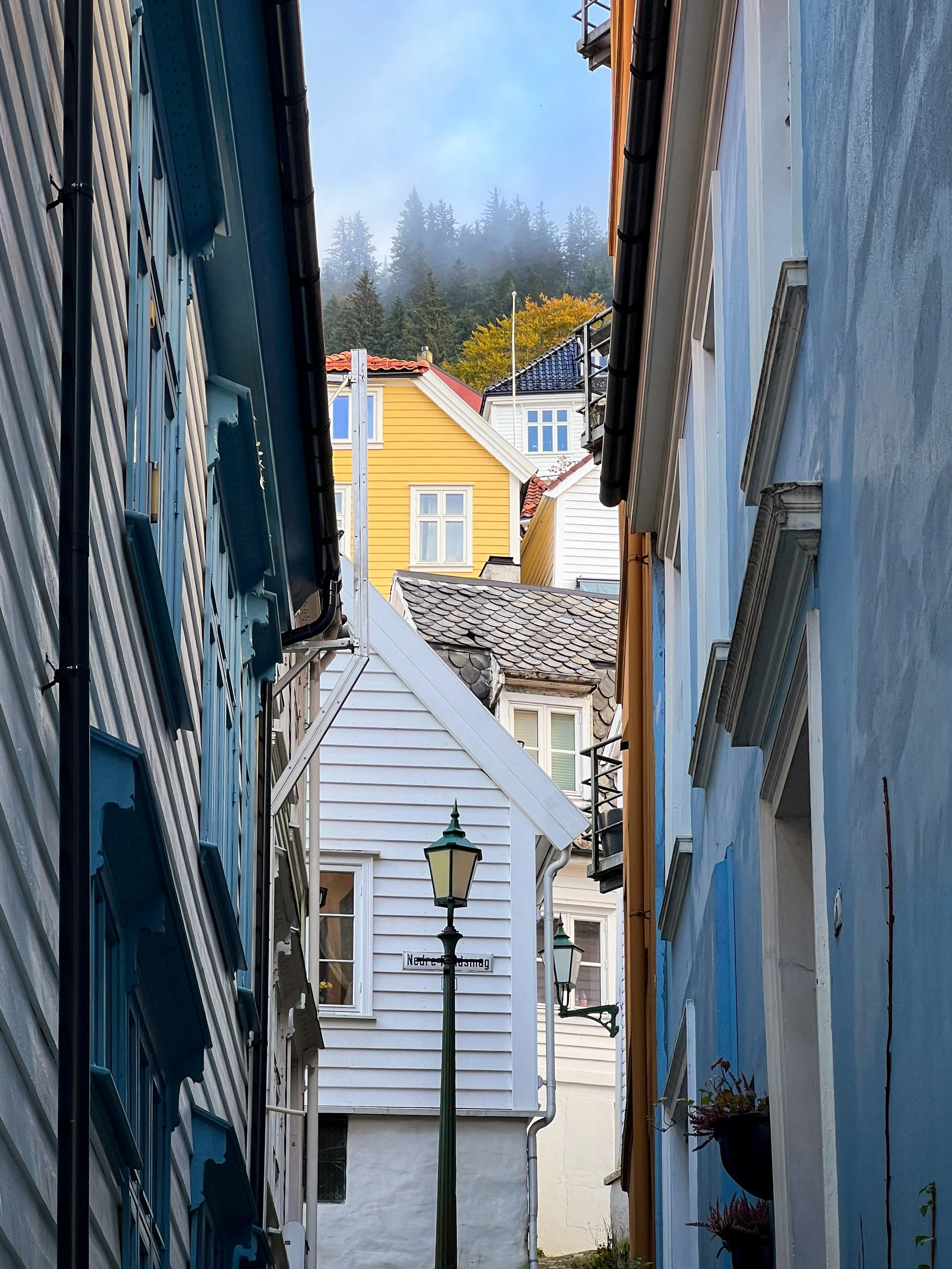
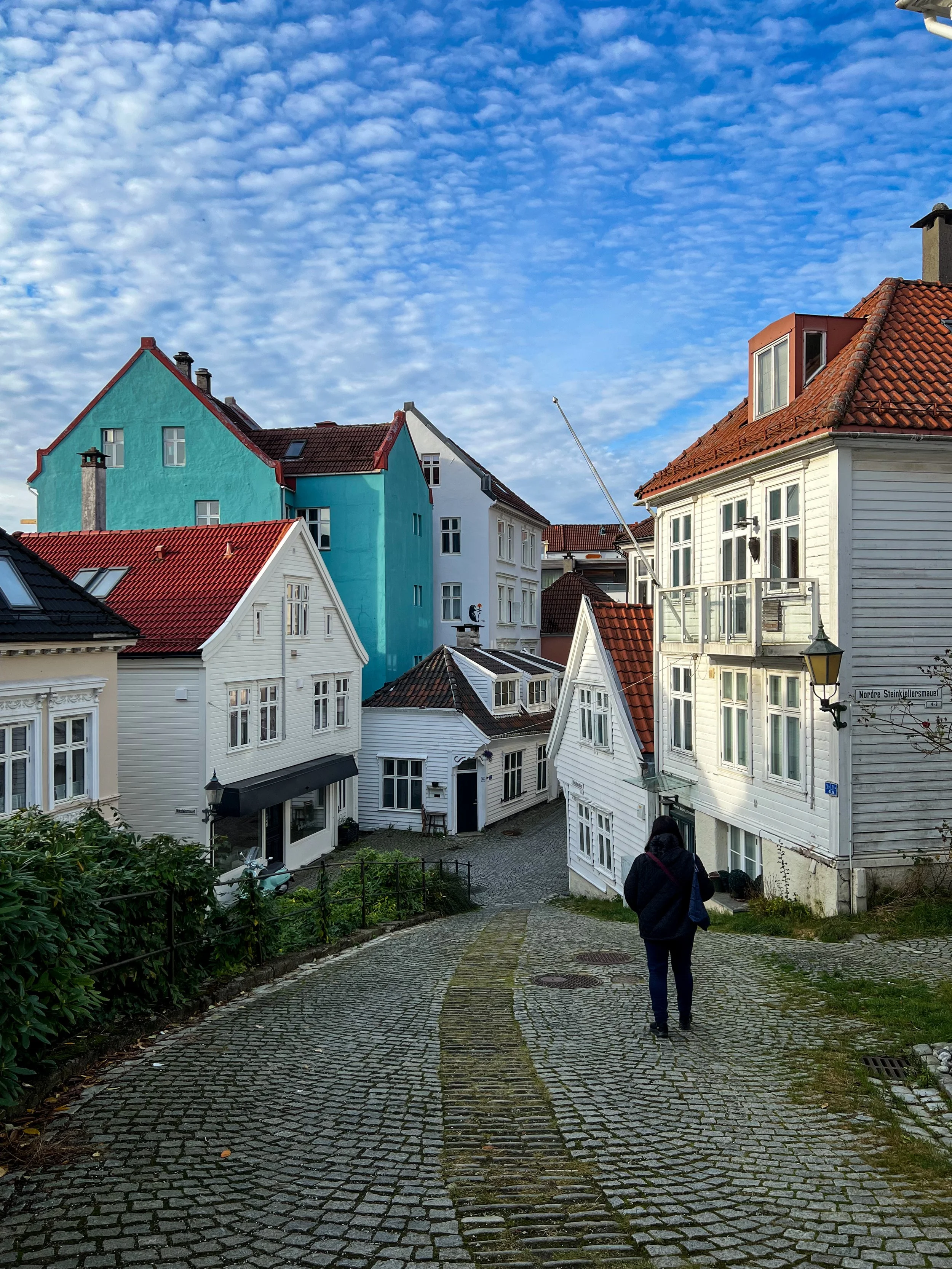
A Small Neighbourhood Guide
Bryggen and Bergenhus
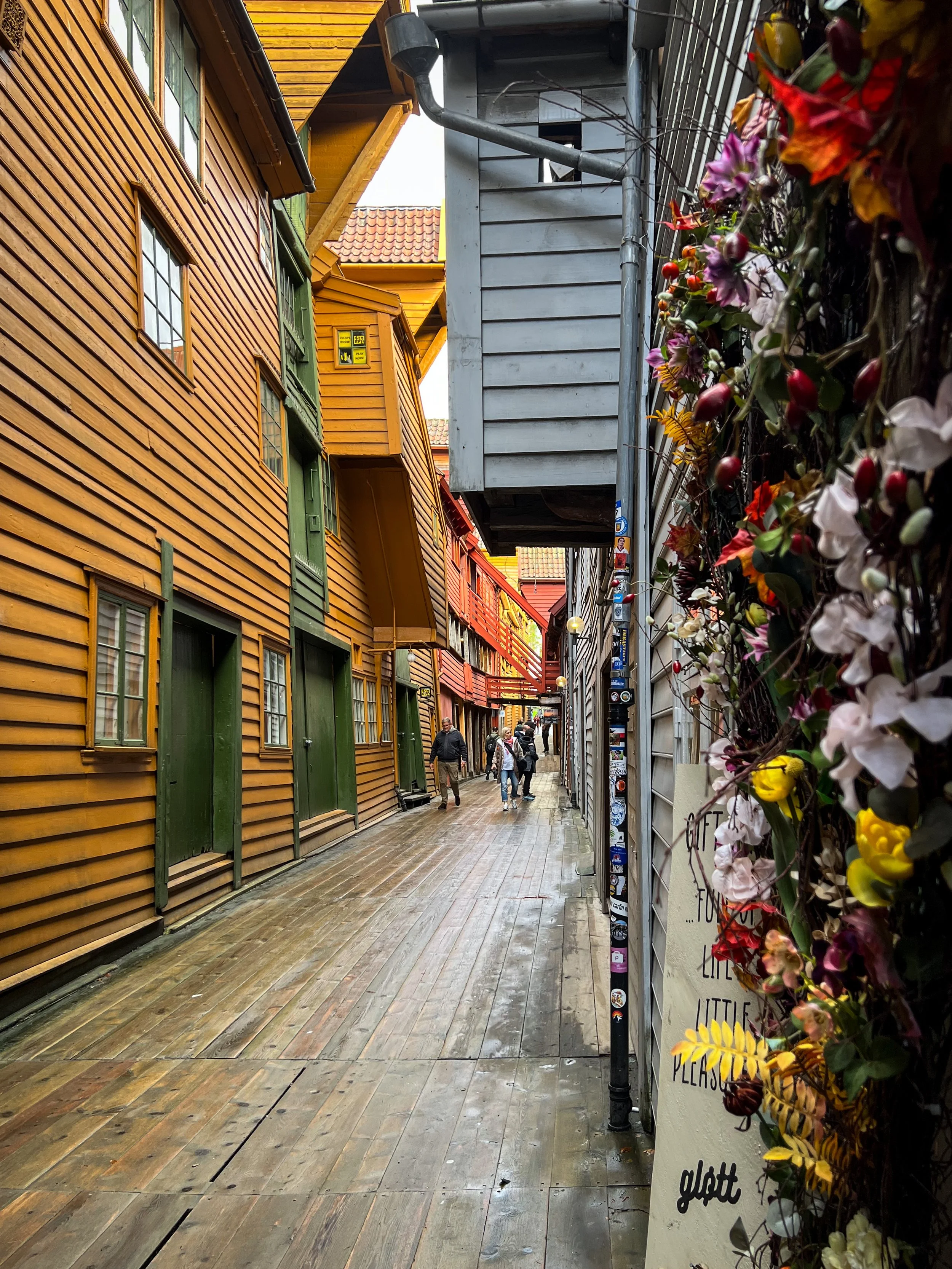
The postcard, and rightly so. The UNESCO-listed wharf is what survives of the Hanseatic trading post, and the facade is the least interesting part of it. Walk into the passages behind instead: crooked timber corridors, tilted floors, workshops and small galleries, and almost nobody in them once you are ten metres off the main frontage.
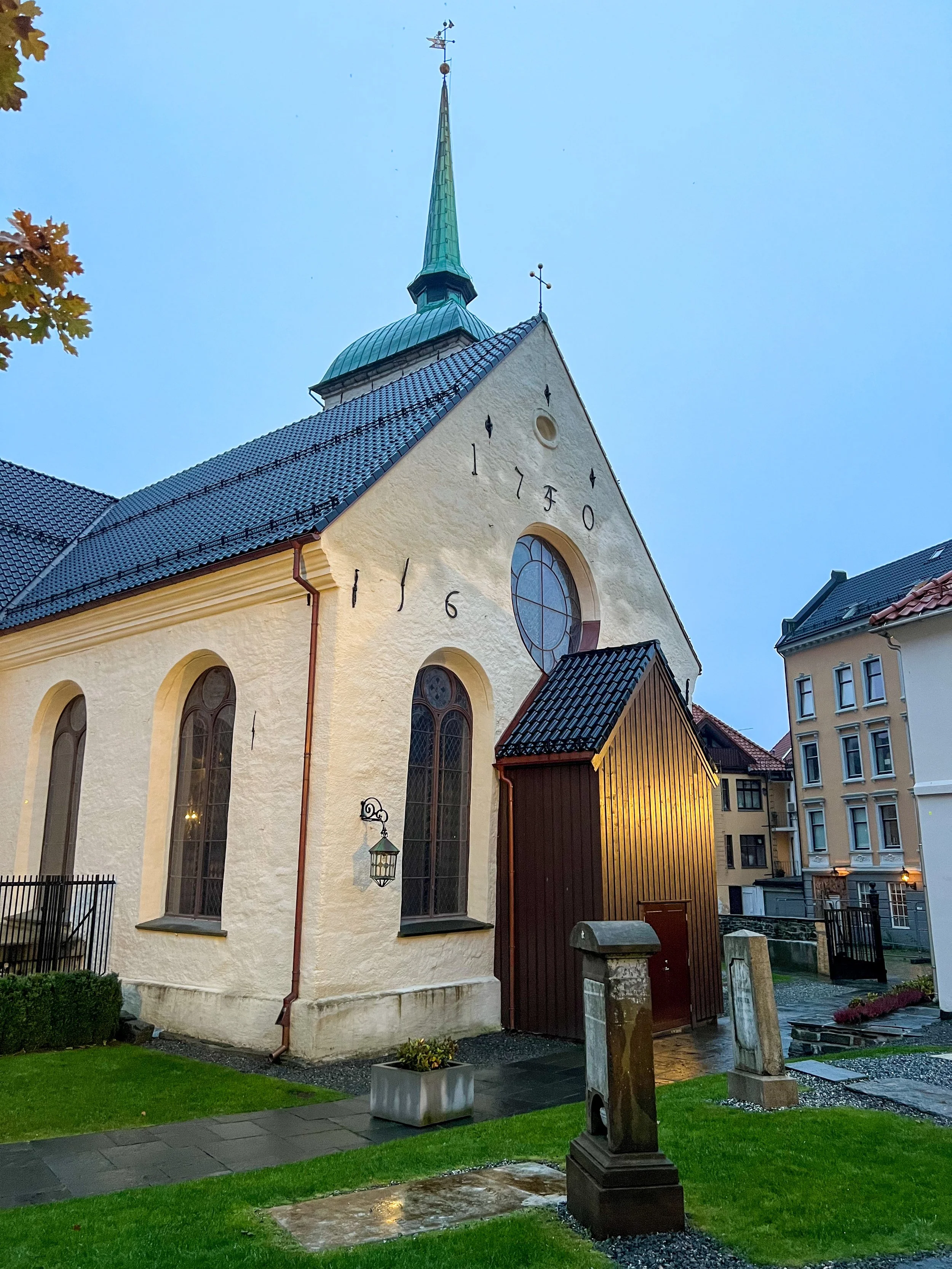
The Hanseatic Museum's original building at Finnegården is closed for a long structural restoration and is not expected back until early 2027, so the collection currently lives at Schøtstuene, the merchants' assembly rooms up on Øvregaten. Behind them, Bergenhus fortress holds Håkon's Hall and the Rosenkrantz Tower, and nearby St Mary's Church is the oldest building in the city.
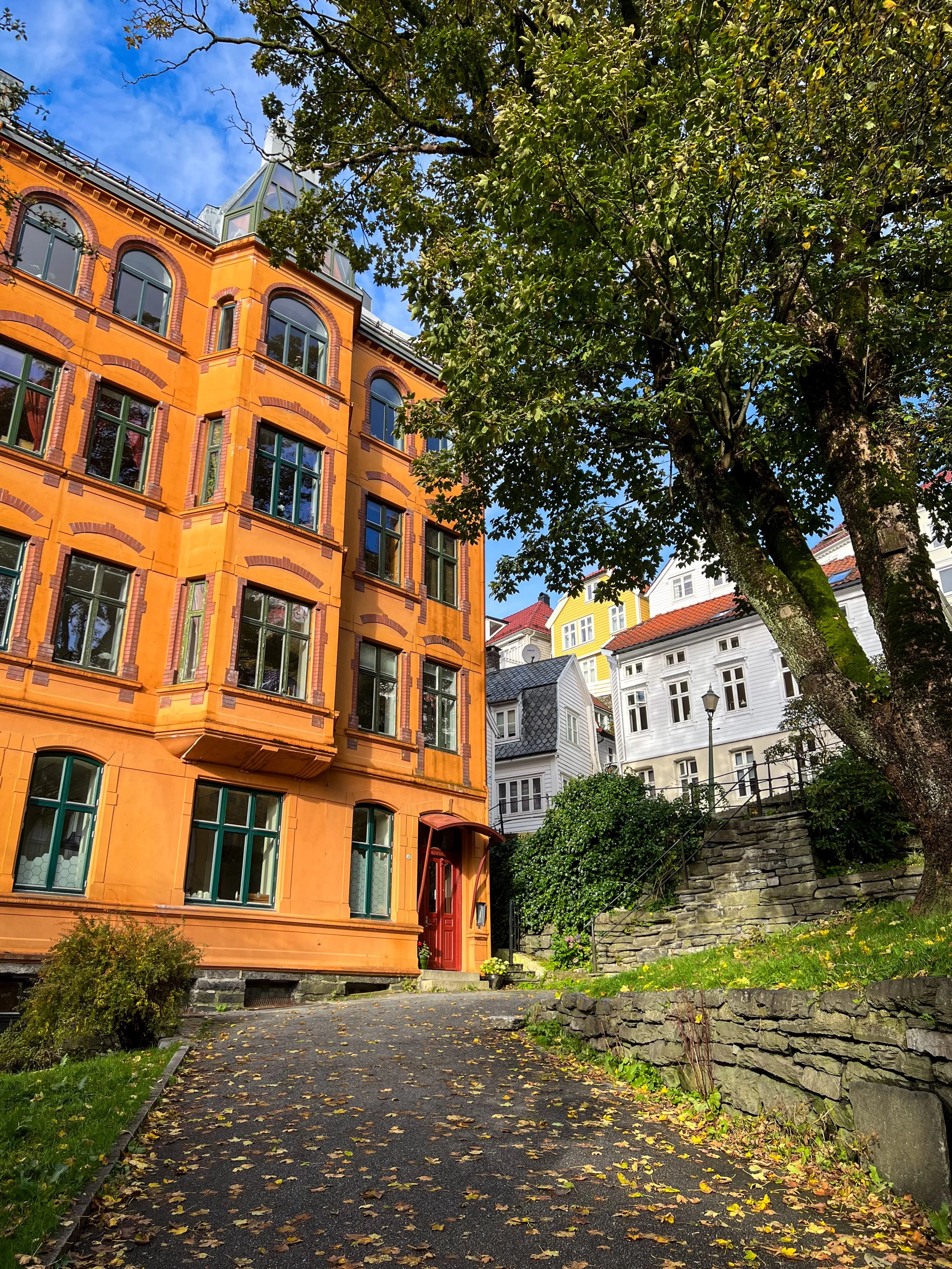
Nordnes
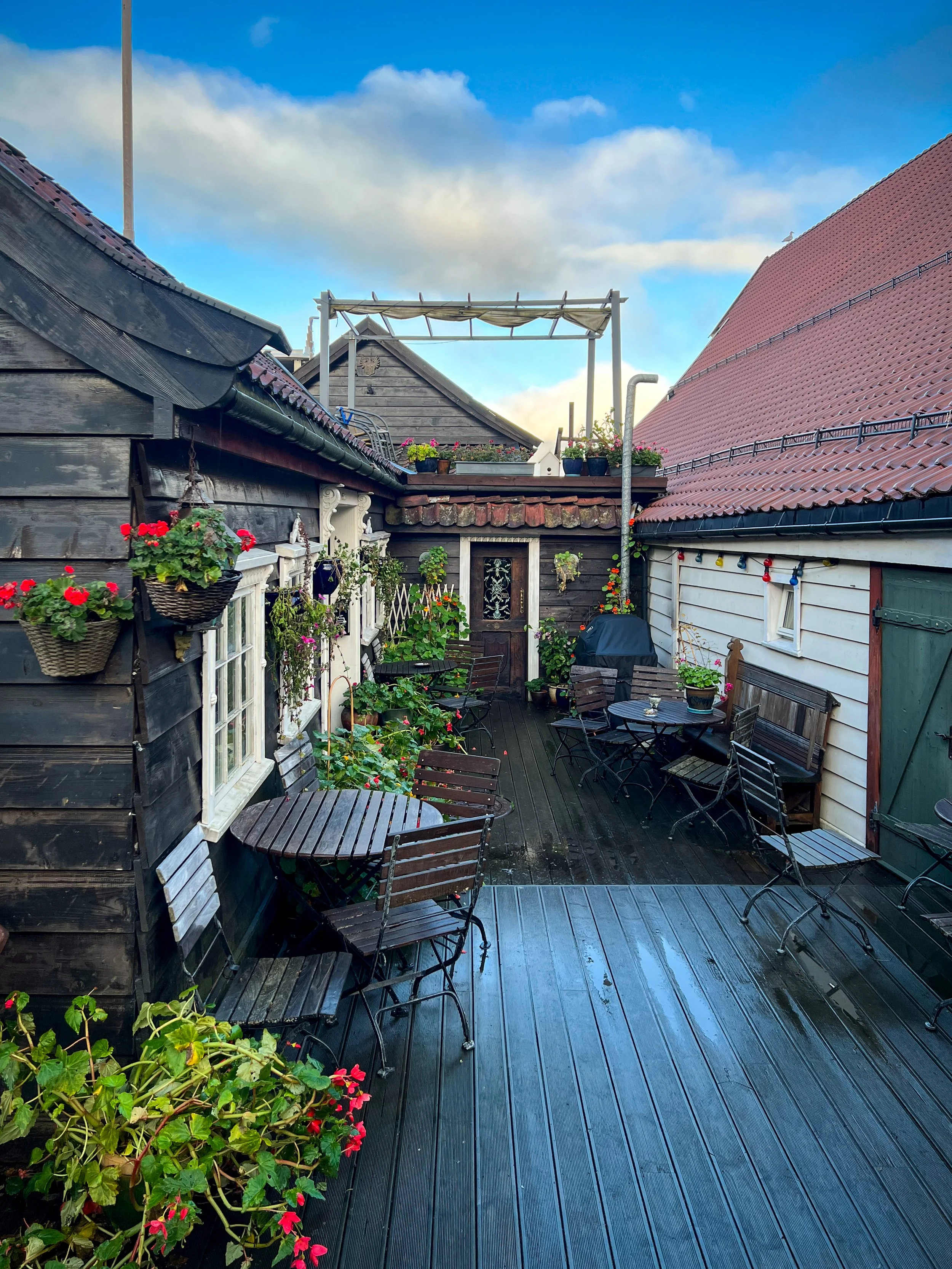
The peninsula that locals half-jokingly call its own republic. Narrow wooden lanes, gardens behind picket fences, and a real neighbourhood feel about four minutes' walk from the tourist crush. At the tip there is a park with a totem pole gifted by Seattle, benches facing the harbour mouth, and the ships going out. The aquarium is here, and so is Nordnes Sjøbad, an outdoor heated seawater pool that opens for the summer.
Sandviken
North along the water, past the fortress: white timber warehouses on the shoreline and old sea captains' houses climbing the hill behind. This is where the Old Bergen Museum sits, and where the Stoltzekleiven staircase starts, which is the single most Bergen thing you can do with a free hour.
Vågsbunnen and Skostredet
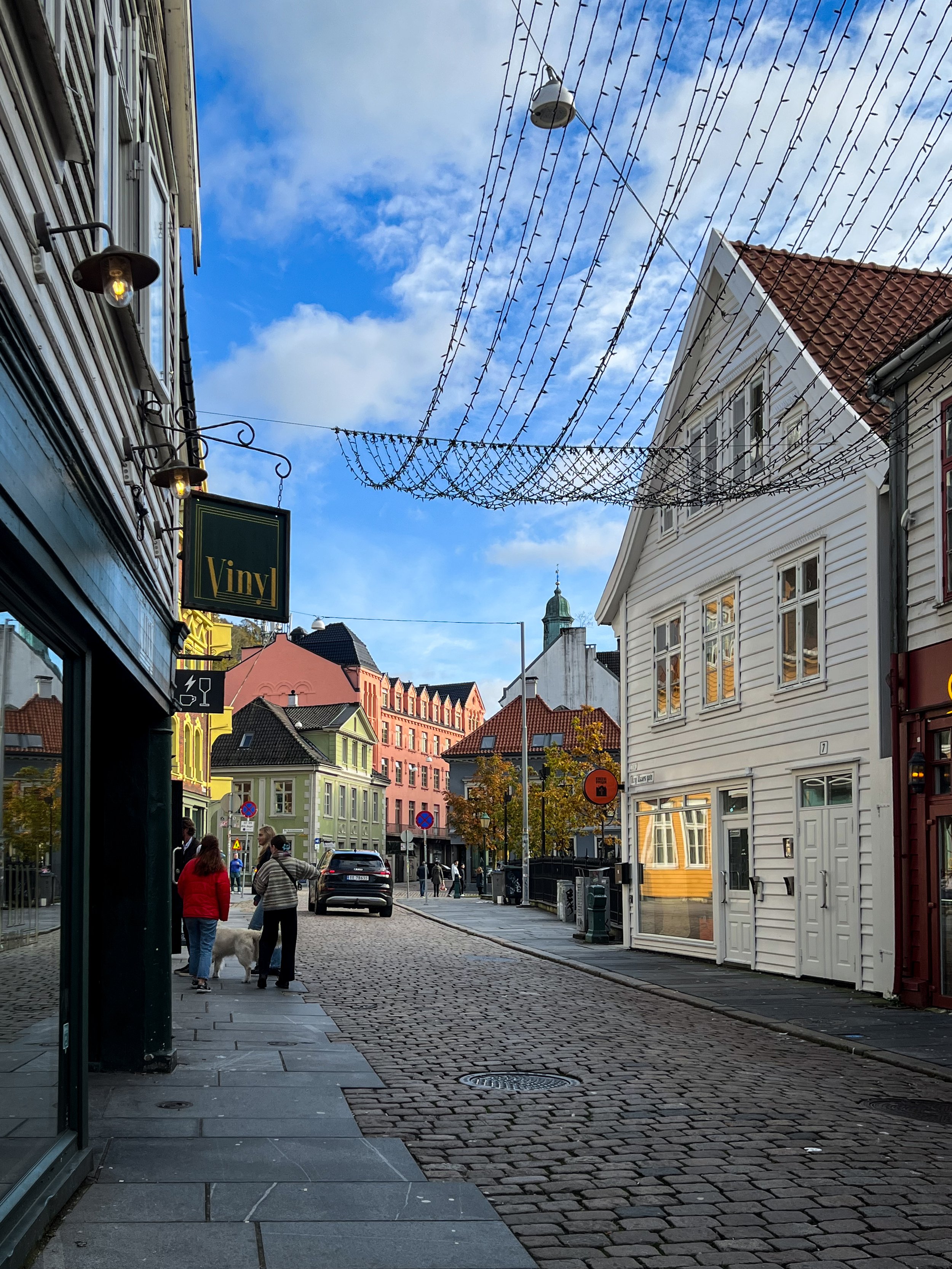
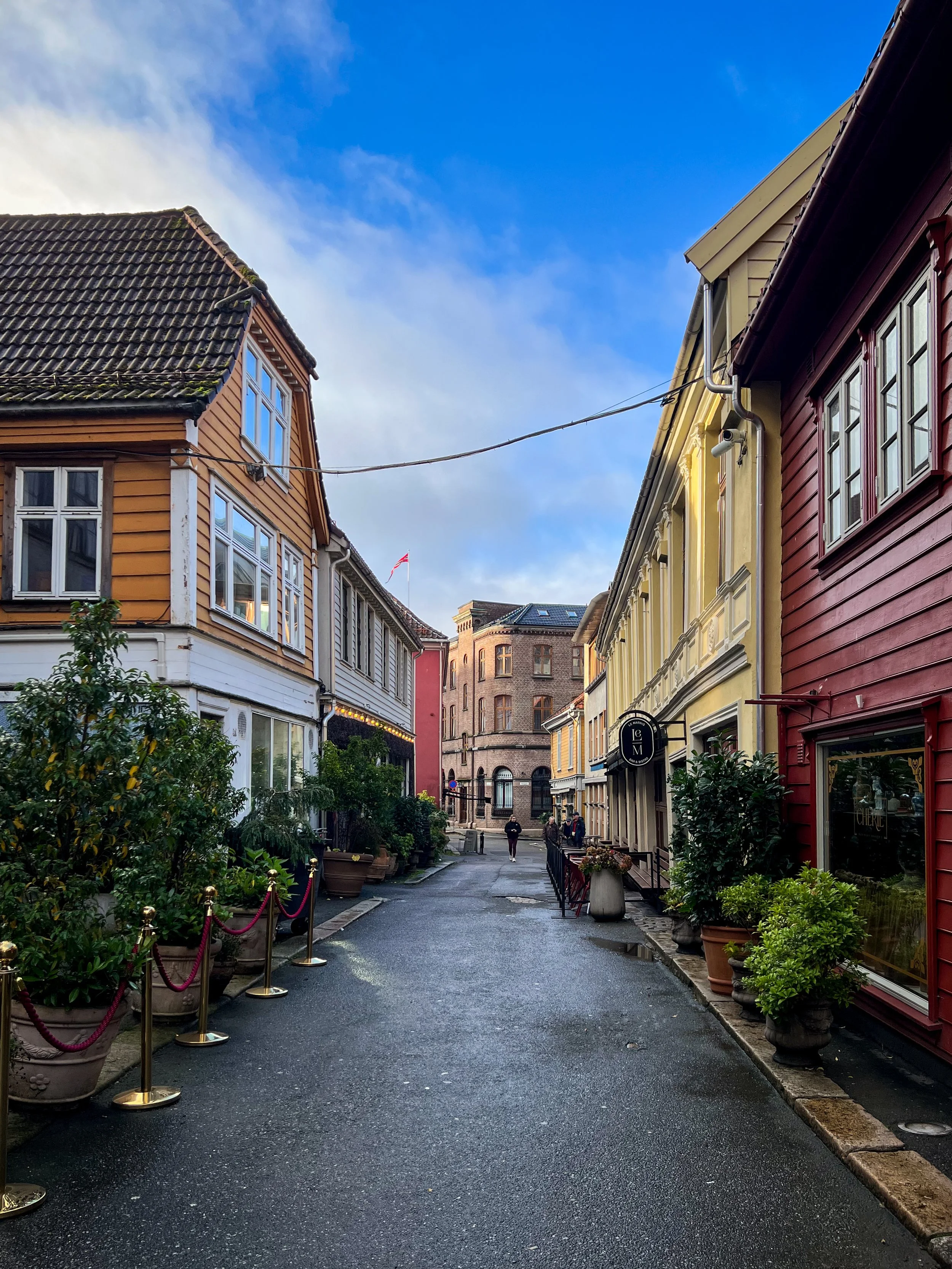
The scruffy, interesting middle of the city. Skostredet is the closest thing Bergen has to a restaurant street, with vintage shops, tattoo studios, small bars and a lot of the places locals actually eat. If you are choosing where to spend an evening, choose here.
Møhlenpris and Nygårdshøyden
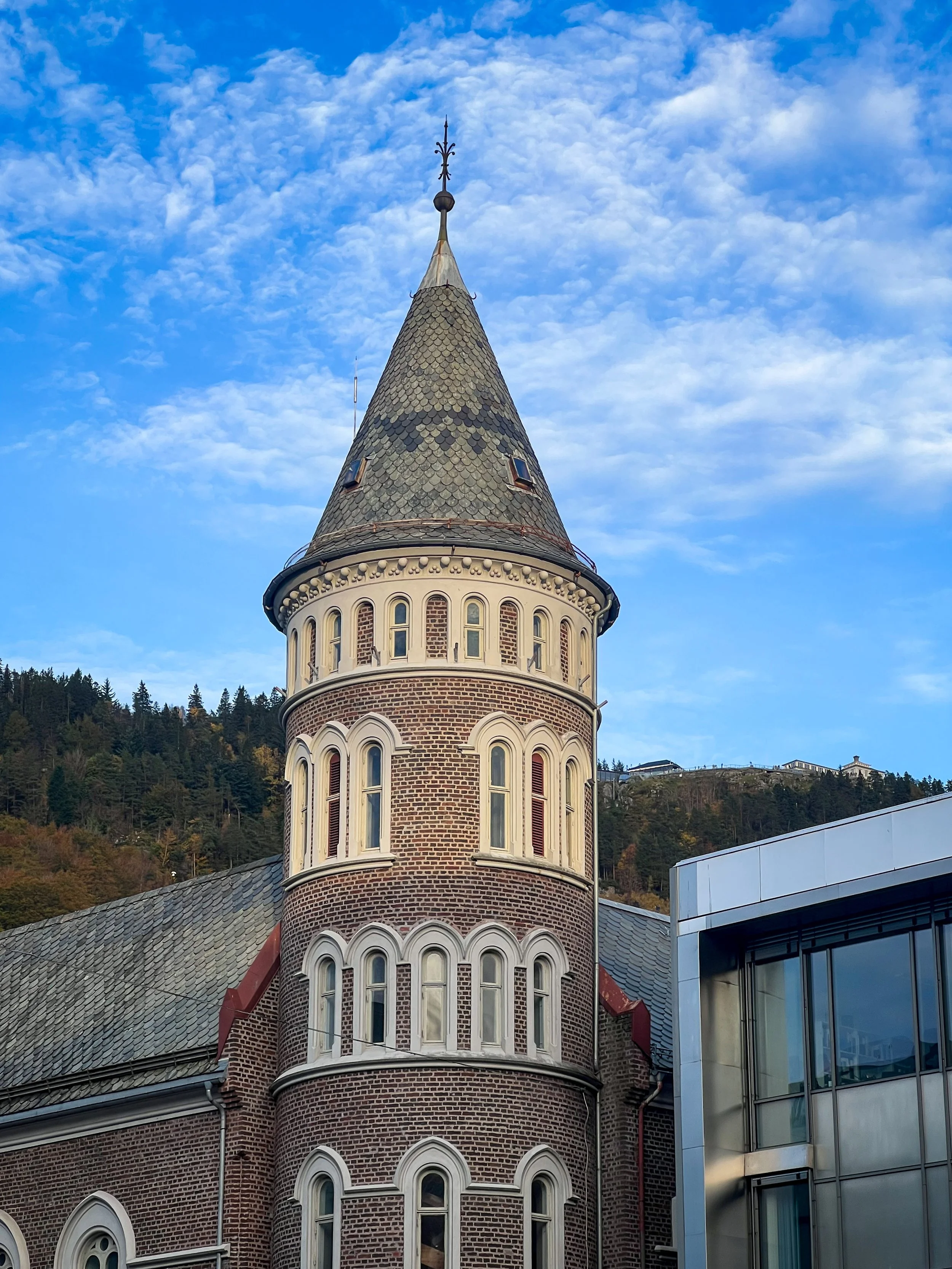
The student side, west and south of the centre: brick terraces, cobbles, the university museums, the Museum Garden with its several thousand plant species, and the Marineholmen waterfront, rebuilt with a small city beach and a floating sauna.
Where to Eat
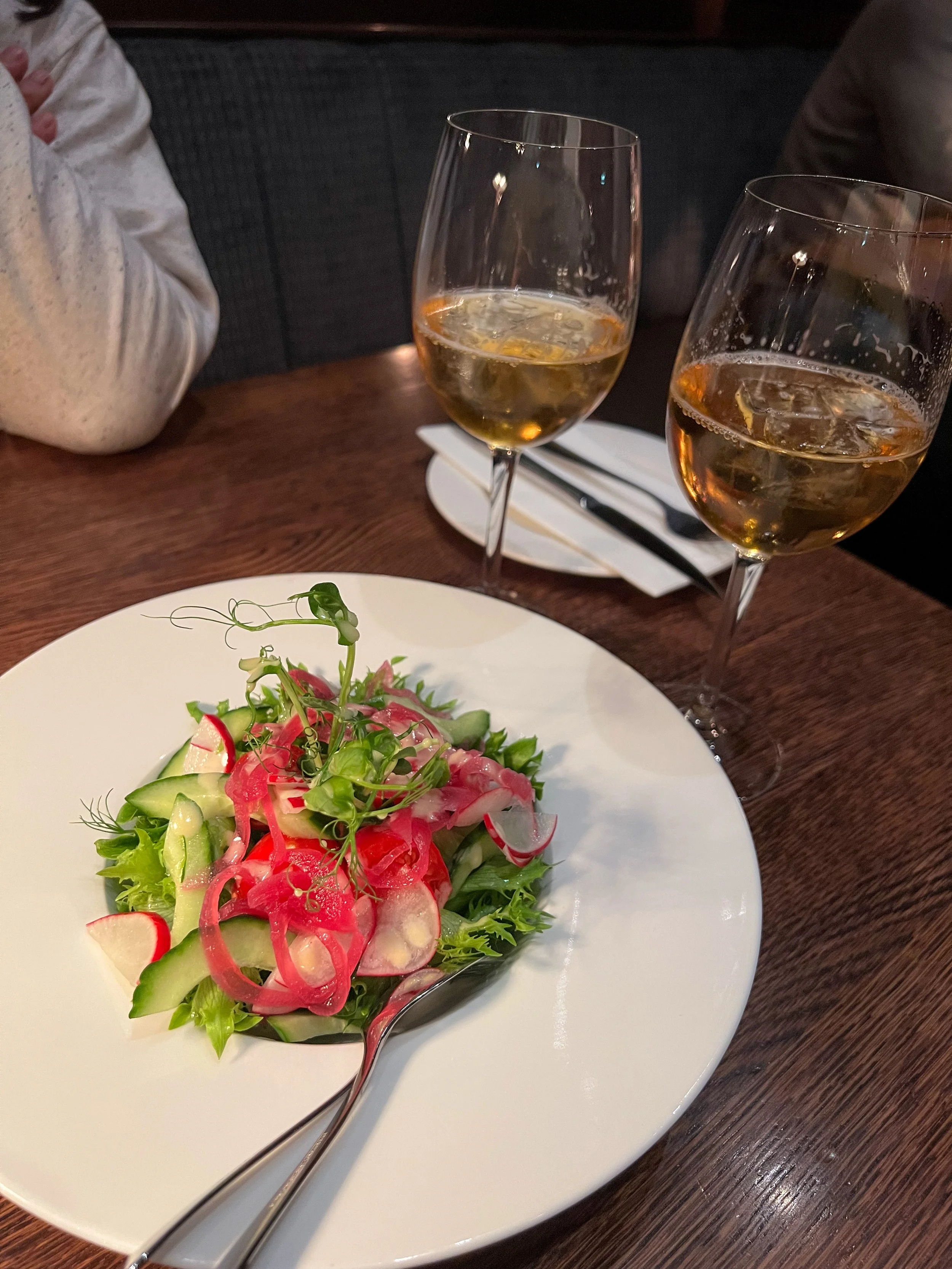
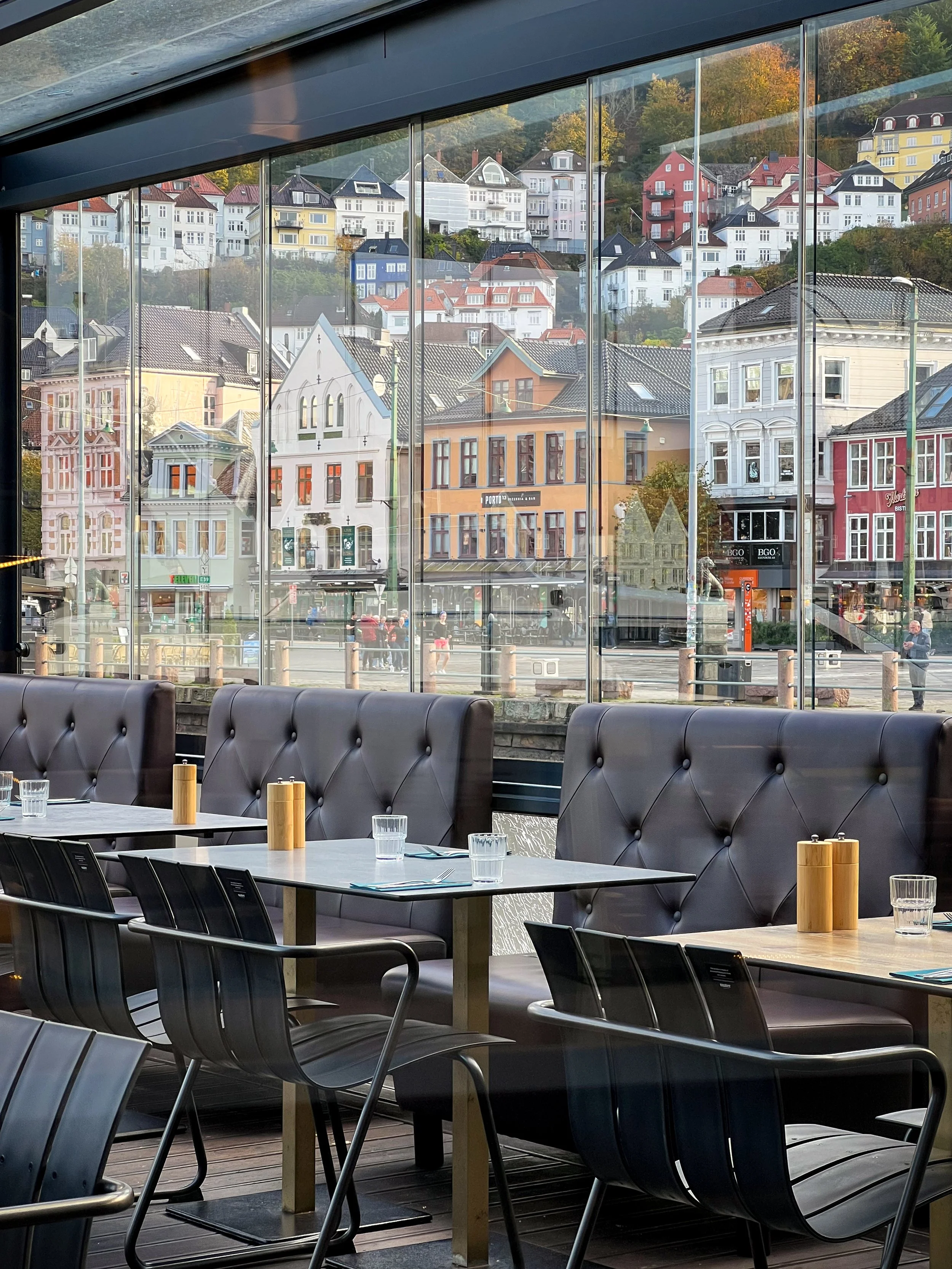
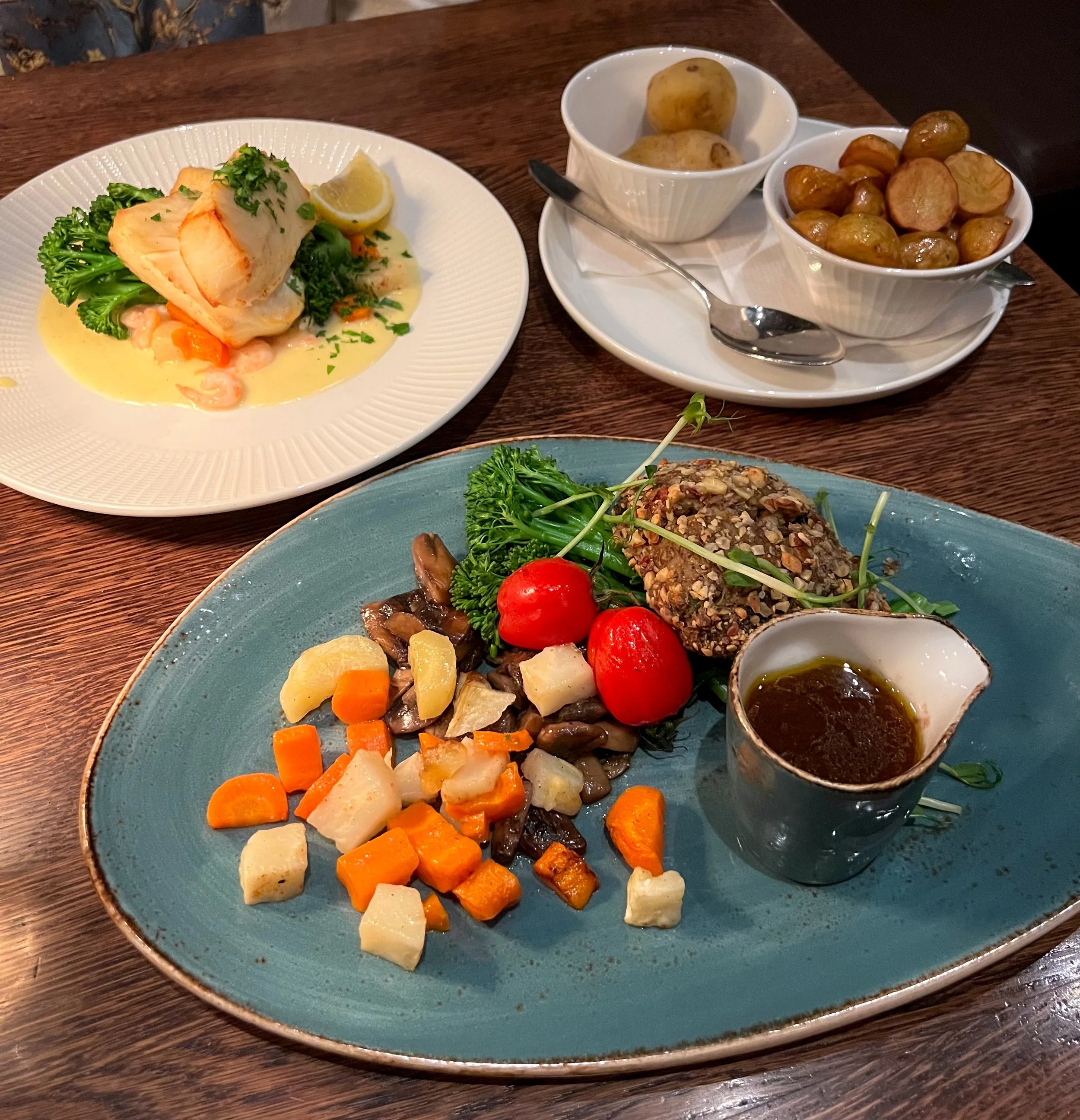
Bergen eats well above its size, and the seafood needs very little ceremony to be good.
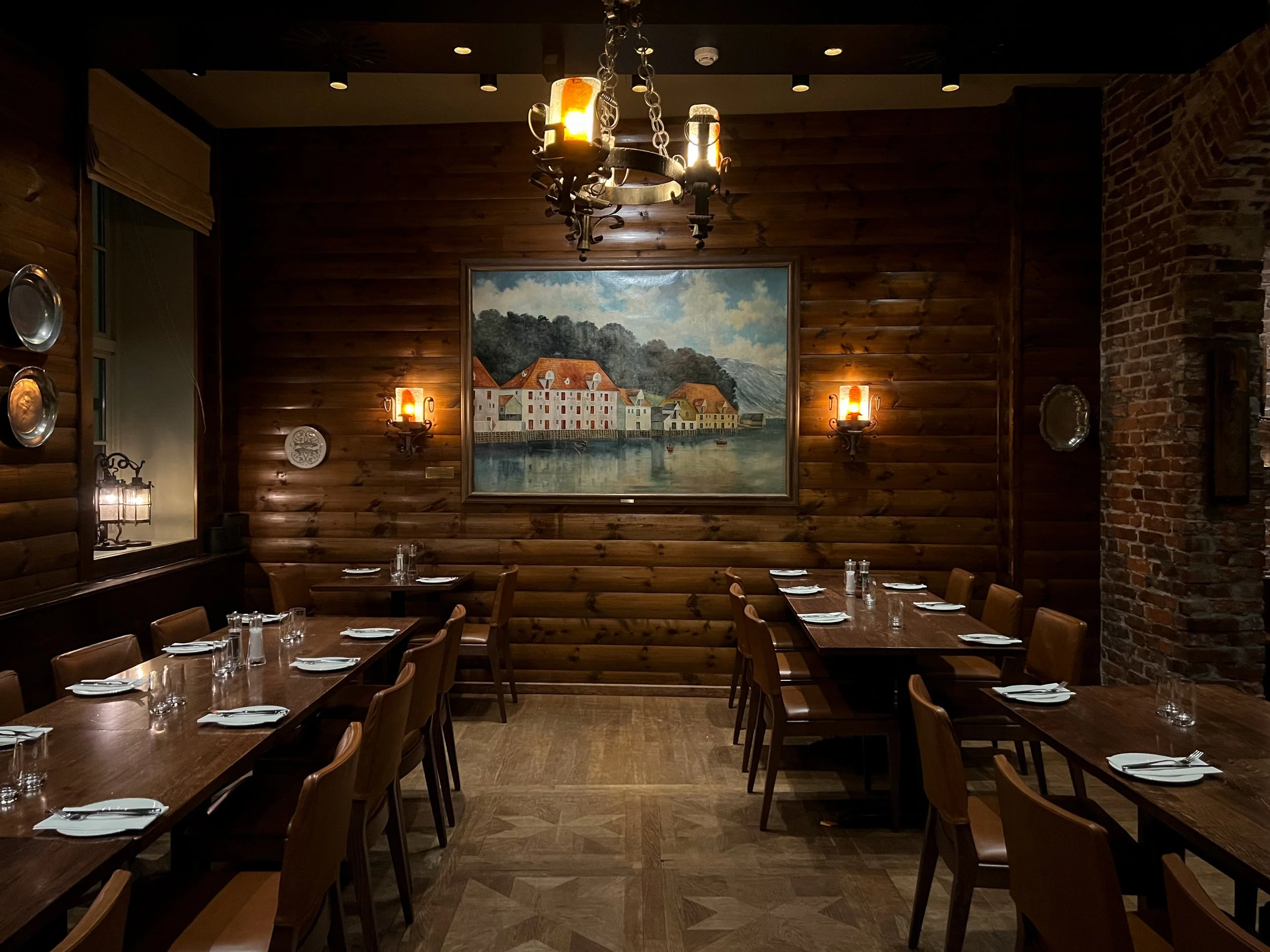
Gaptrast, in Nøstet, is the city's two-star kitchen: a long tasting menu built almost entirely on western Norwegian ingredients. Book months out. Lysverket, one star, sits in the KODE building on Rasmus Meyers allé and serves dinner Tuesday to Saturday only; the room alone is worth the reservation.
For seafood without the tasting-menu format, Enhjørningen occupies one of the old Bryggen houses, and Bryggeloftet next door has been serving fish soup, cured meats and reindeer for a century. Cornelius is out on an island with its own boat from the centre, which is either a wonderful evening or a logistical commitment depending on your mood.
Cheaper and just as good: Søstrene Hagelin for fish cakes and fish soup over a counter, Pingvinen for the kind of Norwegian home cooking that has largely disappeared from menus, Marg & Bein for nose-to-tail cooking on the student side, and Trekroneren, a hot dog stand near Kong Oscars gate that has been feeding the city since the forties and does a reindeer sausage with lingonberry.
The Fisketorget at the head of the harbour has an indoor hall open year-round and an outdoor market in the warm months. It is touristy, and it is still worth twenty minutes.

Coffee, and the Bun You Came For
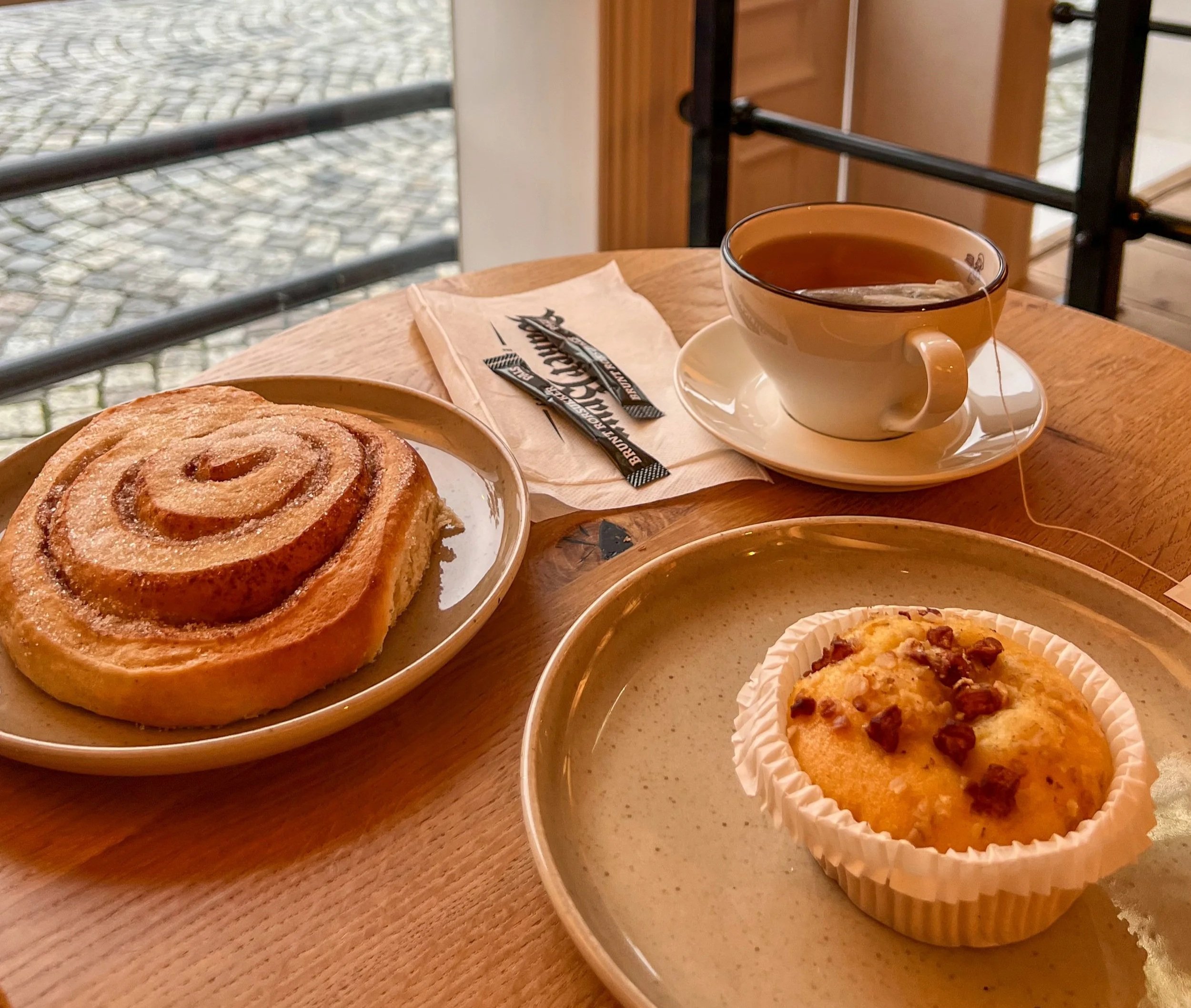
Bergen's pastry is the skillingsbolle, a large cardamom-scented cinnamon bun that has been sold here for centuries. Eat one warm, with the coffee that Norwegians take more seriously than almost anyone.
Det Lille Kaffekompaniet, tucked into Nedre Fjellsmauet below the funicular station, is small, short on seats and worth the wait for its buns and cruffins. Kaffemisjonen is the reliable central roaster. Colonialen Fetevare on Strandgaten is half delicatessen, half lunch counter. Godt Brød bakes organic across several branches and is the easy default. Baker Brun on Bryggen is where most visitors meet their first skillingsbolle. For rain days, Fjåk on Skostredet builds hot chocolate to order from Hardanger-made chocolate, and Café Opera, going since 1985, still claims the city's first cappuccino.
Museums Worth the Time
KODE is the anchor: four buildings around the small lake in the centre, now going by their names rather than numbers. Rasmus Meyer holds the older Norwegian collection and the Munch paintings, Permanenten the decorative arts and silver, Stenersen the modern and contemporary work, and Lysverket the restaurant of the same name. One ticket, currently 200 NOK, covers all of them and under-18s go free, so pick the building that suits your mood rather than marching through all four.
Troldhaugen, Edvard Grieg's villa above Lake Nordås, is the other essential, especially in summer when there are recitals in the small hall built into the hillside. In town, Bryggens Museum sits on excavated medieval foundations, and Håkon's Hall and the Rosenkrantz Tower at Bergenhus give you the thirteenth-century version of the city. The Bergen Maritime Museum and the University Museum on Nygårdshøyden are both good wet-weather insurance, as is the aquarium at Nordnes if you are travelling with children.
Parks, and Places to Sit
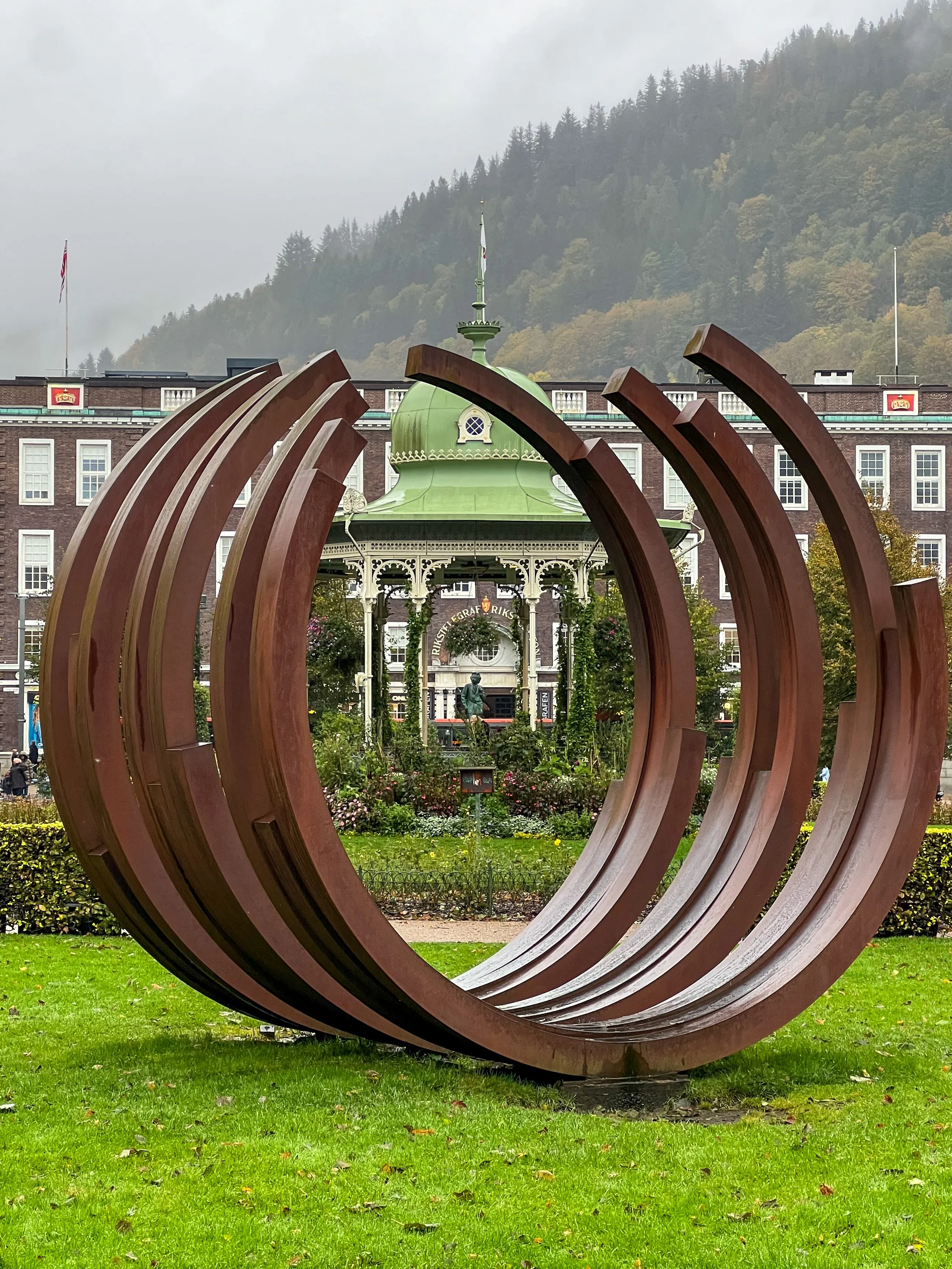
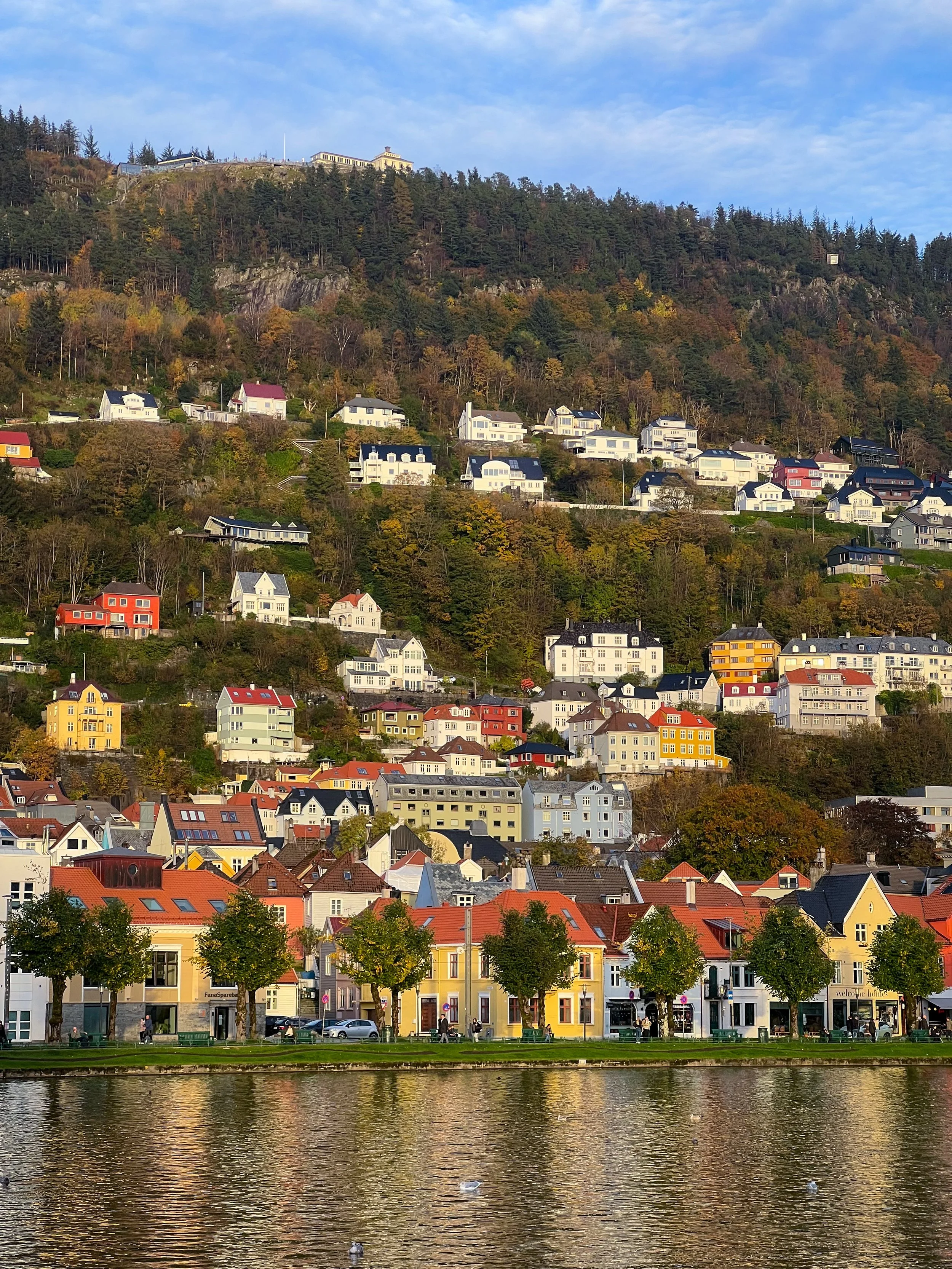
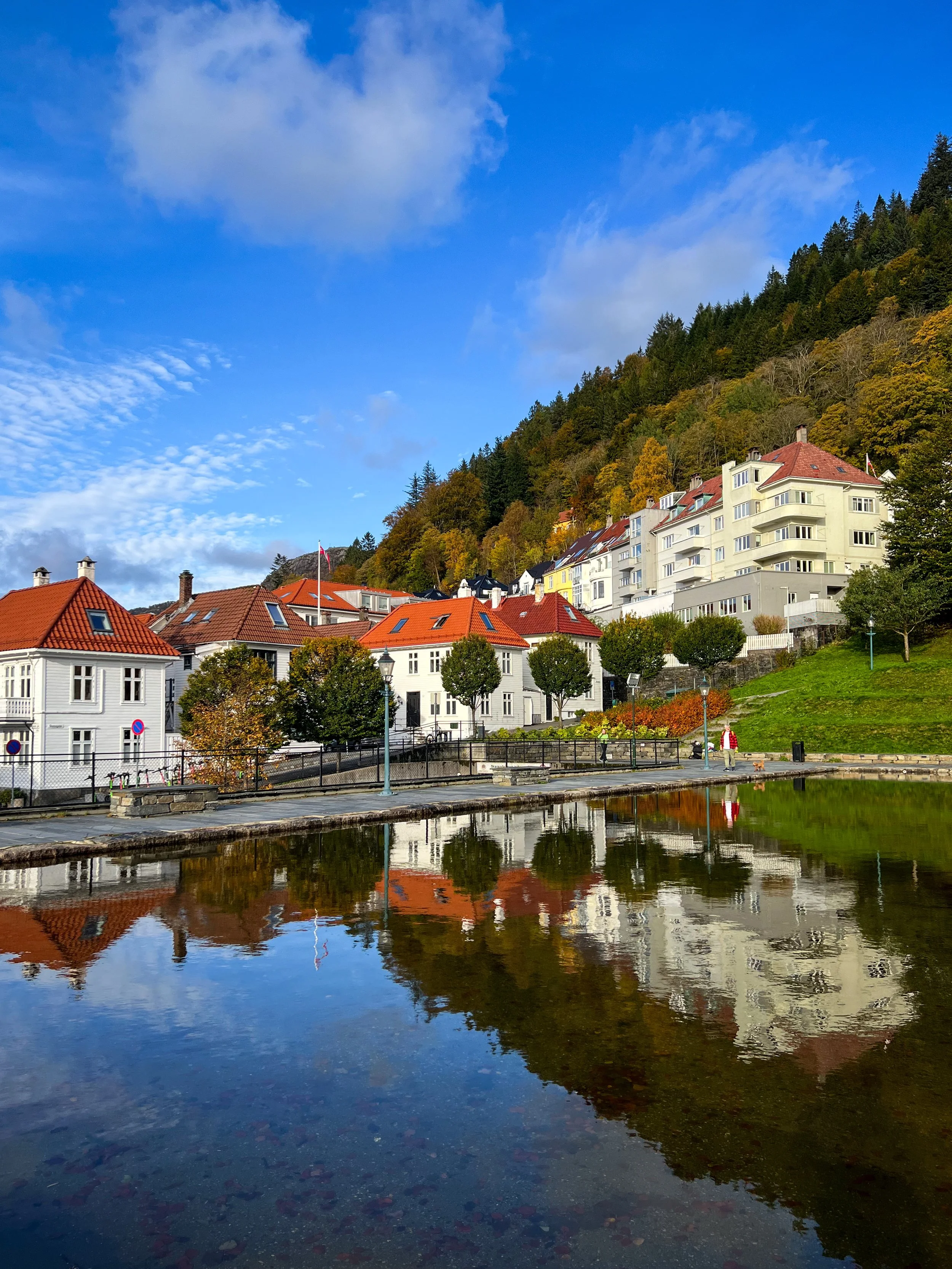
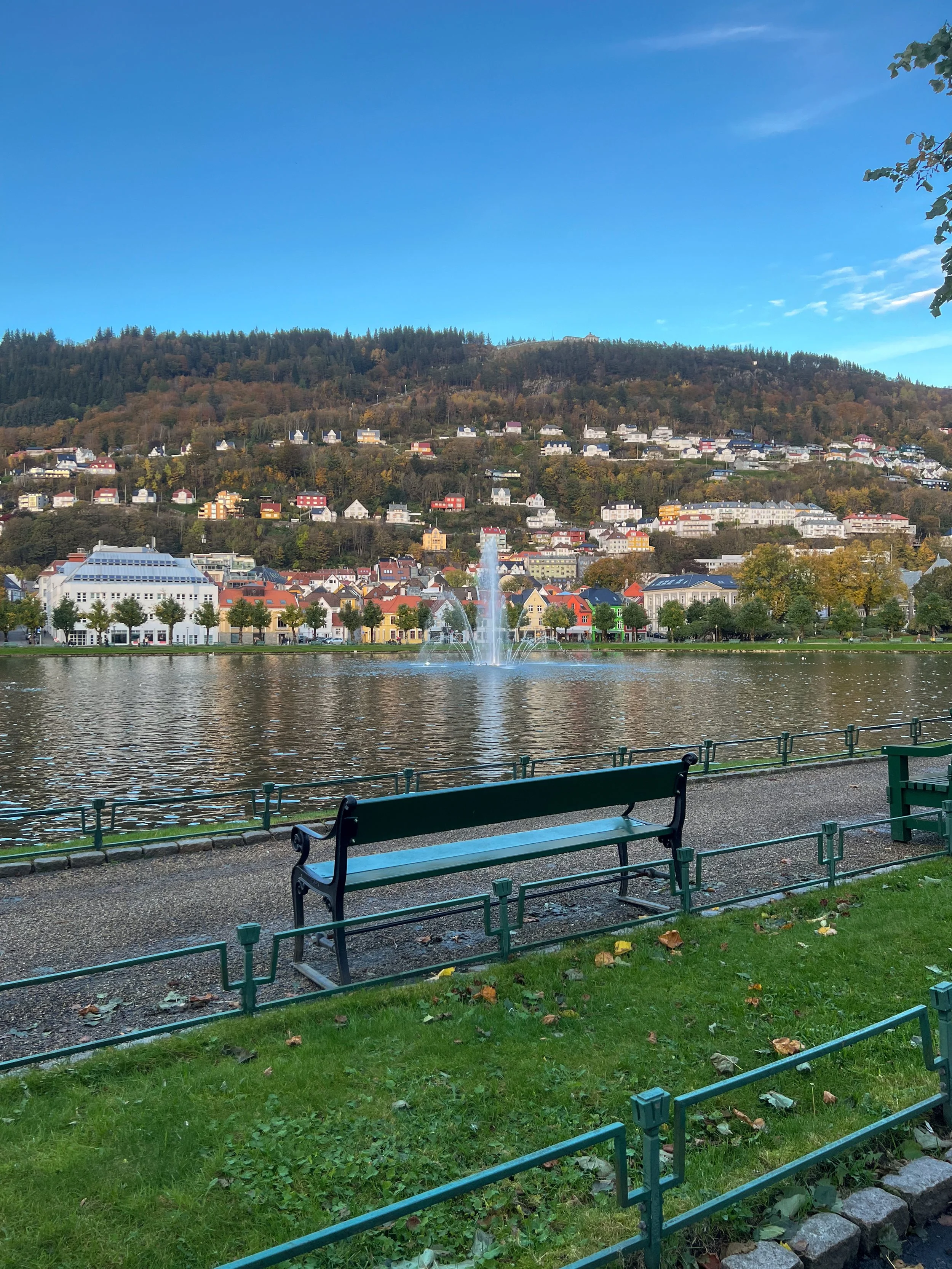
Byparken, around the little octagonal lake in the middle of town, is where Bergen goes the moment there is sun, with the music pavilion at one end and rhododendrons in early summer. The lake itself is Lille Lungegårdsvannet, with a paved path the whole way round it — ten flat minutes, a fountain in the middle and the KODE buildings along one side. Nordnesparken at the tip of the peninsula has a rose garden and the best benches in the city for watching boats. Nygårdsparken is the big landscaped one on the student side, and the Museum Garden beside it is a quiet botanical collection that almost no visitor finds.
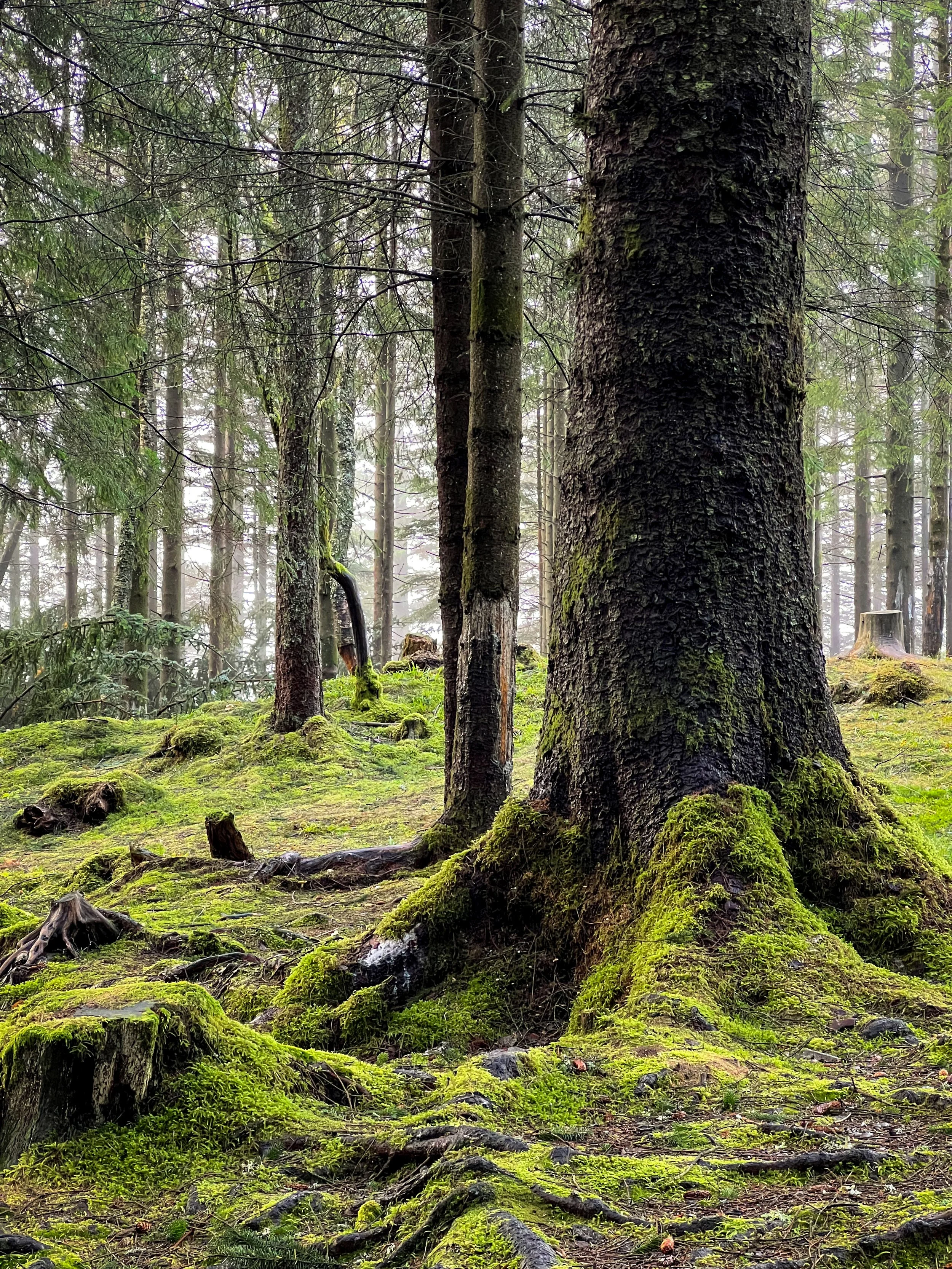
Up on the mountain, Skomakerdiket is a small lake about half an hour's easy walk from the top of the funicular, with a loop path that takes a pushchair. And Fjellveien, the gravel road running along the hillside above the city, is the local evening walk: flat, forty minutes end to end, the whole harbour laid out below you.
The Active Half of Bergen
Bergen has seven mountains and treats them as extensions of the street network.
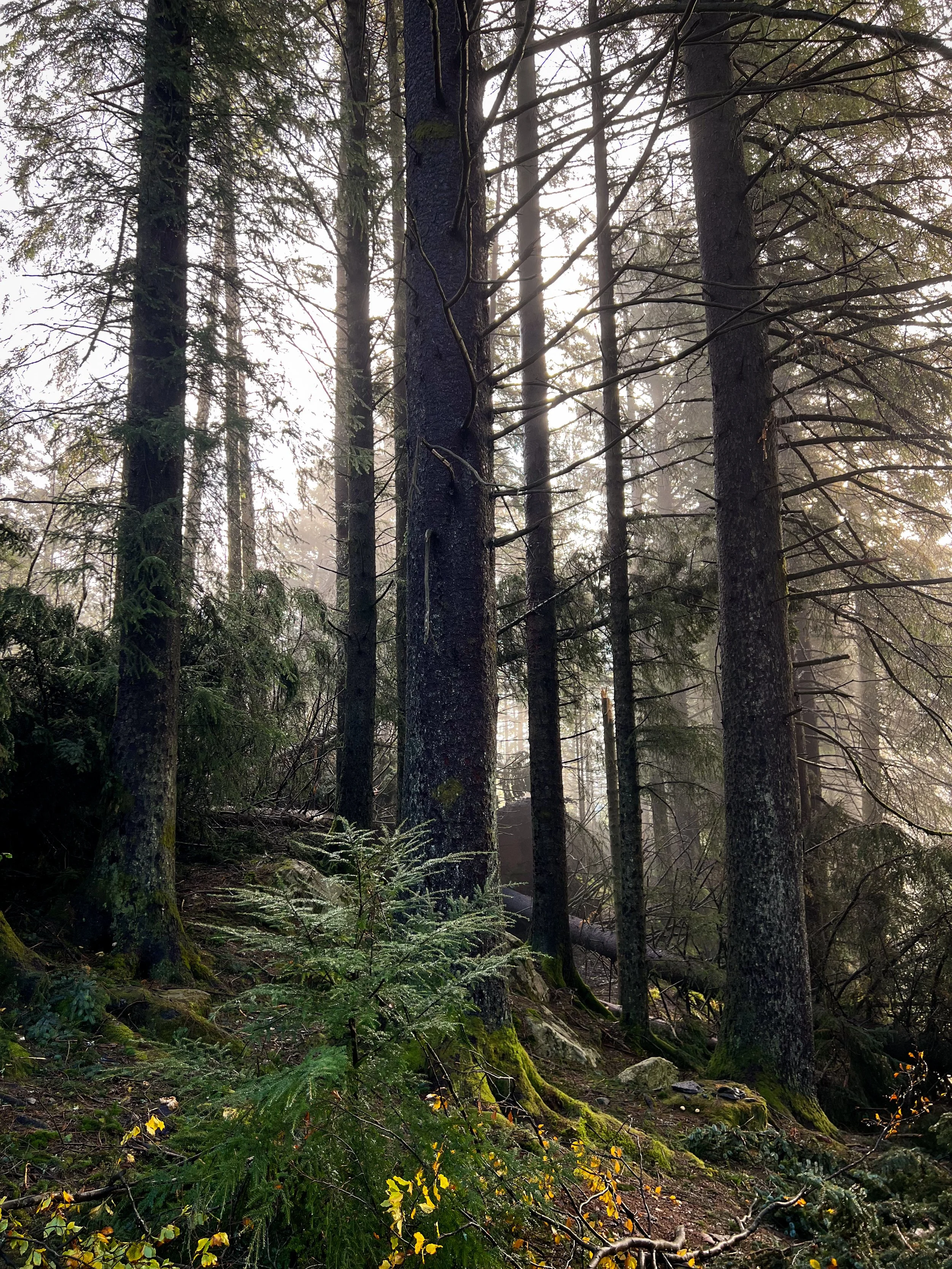
Fløyen, at 425 metres, is the accessible one. The funicular takes six minutes and runs from early morning until around midnight, and the top has cafés, the city's largest playground and a network of marked trails. Walking down is the point.
Ulriken, at 643 metres, is the highest. The cable car takes five minutes and costs 255 NOK one way or 435 NOK return, with a restaurant, a café and a zip line at the summit. It runs daily through the summer, closes on Mondays in winter, and takes a maintenance break in early January.
Vidden is the classic link between the two: roughly five hours across an open plateau from Ulriken to Fløyen, with no shelter and no shortcuts once you commit. Read the forecast honestly, and turn back if it closes in.
Stoltzekleiven in Sandviken is a stone staircase running almost straight up the hillside. Locals race it. Everyone else stops twice and pretends to admire the view.
On the water, kayaking runs from the city out through the archipelago with several operators, and the fjord cruise to Mostraumen is the best three and a half hours you can buy here: it leaves from Zachariasbryggen by the fish market, costs around 890 NOK for adults, and threads a narrow strait where the boat noses close enough to a waterfall to get you wet.
Then there is the sauna, which has become a real part of the city's weekly rhythm. City Sauna at Marineholmen runs drop-in hours for about 160 NOK, and Heit has floating saunas on the water. Pair either with a cold swim, or with the heated outdoor pool at Nordnes Sjøbad in summer.
Practical Notes
Norway is effectively cashless and most people pay by phone, so a card covers everything. The Bergen Card only pays for itself if you plan on three or more paid attractions in a day. Book the funicular, the cable car and the fjord cruise online in high season, and check whether large ships are in port that morning, because the difference in queues is dramatic. Alcohol is expensive and sold in shops only until early evening, earlier on Saturdays and not at all on Sundays.
Two days covers the city comfortably. A third lets you add a proper fjord day, or the train towards Voss, without cutting anything.
Frequently Asked Questions
Is two days enough for Bergen?
For the city itself, yes. Two full days cover the harbour, one or two museums, both mountains and two good dinners. Add a third day if you want a fjord excursion without rushing.
Fløyen or Ulriken?
Fløyen if you have half a day and want to walk down through the woods into town. Ulriken if you want the high, bare, exposed version and the better view. If you only do one and the sky is clear, take Ulriken.
When is the best time to visit Bergen?
May to September for long days and open outdoor pools, with late May and September giving you the same light and far fewer cruise passengers. Winter is dark and wet but atmospheric, and the mountains stay accessible.
Do I need to book restaurants in advance?
For the tasting-menu kitchens, weeks or months ahead. Everywhere else, a day or two is usually enough, and lunch rarely needs booking at all.
Is Bergen walkable?
Almost entirely. The centre is compact and flat around the harbour, though the residential streets climb quickly. Good shoes matter more than a transport pass.
Is it worth going if it rains?
Yes, and it will. The museums, the market hall, the cafés and the saunas are all built around that fact, and the city looks better wet than it does in flat sunshine.
